An email landed in my inbox last Tuesday that I can’t stop thinking about. “Susana,” it started, “I’ve tried every diet out there. I’m 48, I’ve gained 15 kg in two years, and I feel like a stranger in my own body. My doctor says it’s just perimenopause and to ‘eat less and move more.’ I’m already eating salads and running three times a week. I’m exhausted and nothing works. Do you have a perimenopause diet plan that actually addresses what’s happening to us?”
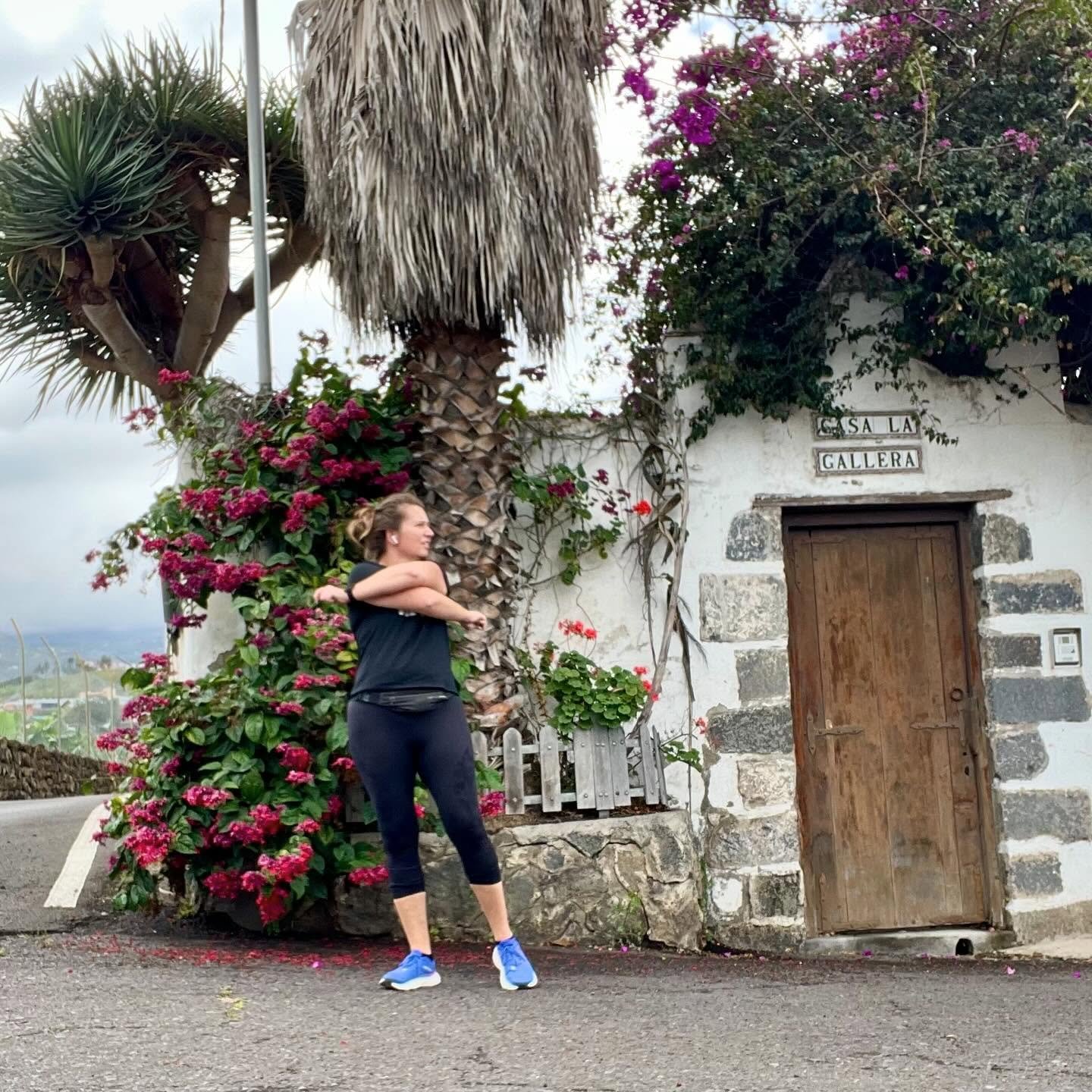
I sat with that email for a long time. Because seven years ago, that was me. Standing at 100kg, feeling invisible, dismissed by doctors who seemed to think willpower was the answer to hormonal chaos.
Here’s what I’ve learned since losing over 40kg and keeping it off through perimenopause: your body isn’t broken. It’s changing. And the diet that worked in your 30s? It’s fighting against your hormones now, not working with them.
Why Traditional Diets Fail During Perimenopause
Let me tell you about my friend Isabel. She’s 51, lives in Valencia, and for six months she followed a low-fat, low-calorie diet her nutritionist recommended. She ate 1200 calories a day, mostly grains and fruit, barely any fat. She was hungry all the time, her hot flashes got worse, and she gained three more kilos.
“I felt like I was going crazy,” she told me over coffee last month. “I was doing everything ‘right’ and my body was doing the opposite of what it should.”
Here’s what’s actually happening in perimenopause: your estrogen is fluctuating wildly, your insulin sensitivity is decreasing, and your cortisol is often elevated from stress and poor sleep. A 2023 study published in the Journal of Clinical Endocrinology found that women in perimenopause have significantly altered glucose metabolism compared to their premenopausal years.
When you eat a high-carb, low-fat diet during this time, you’re basically throwing gasoline on a hormonal fire. Your blood sugar spikes, insulin floods your system, and your body becomes incredibly efficient at storing fat, especially around your middle.
What Makes a Perimenopause Diet Plan Different
The perimenopause diet plan I follow now, and that I share with the women in my community, isn’t about restriction. It’s about giving your changing body exactly what it needs to stabilize hormones, maintain energy, and yes, release weight naturally.
Three core principles guide everything:
Healthy fats become your foundation. I’m talking about real Mediterranean fats: extra virgin olive oil, fatty fish like sardines and salmon, olives, nuts, avocados. These fats don’t just satisfy you, they’re essential for hormone production. Your body makes hormones from cholesterol and fats. When you cut fat too low, you’re literally starving your hormone system.
A client I worked with, let’s call her Carmen, was terrified of fat. She’d been on low-fat diets for 20 years. When she finally started having 2-3 tablespoons of olive oil daily, eating whole eggs, and adding fatty fish three times a week, her energy returned within two weeks. “I forgot what it felt like to not be exhausted by 2pm,” she messaged me.
Protein at every meal becomes non-negotiable. During perimenopause, you’re losing muscle mass faster than ever before. Research from the North American Menopause Society shows that women can lose up to 10% of their muscle mass during the perimenopausal transition. Muscle is your metabolic engine, and it’s also protective for bone health.
I aim for 25-30 grams of protein at each meal. That’s a palm-sized piece of fish, or three eggs, or a generous portion of chicken. Not protein powder or shakes. Real food that your body recognizes.
Carbohydrates come from vegetables and strategic sources. I’m not zero-carb. That doesn’t work for most women long-term, especially in perimenopause when cortisol is already elevated. But I get my carbs from non-starchy vegetables, leafy greens, some berries, and occasionally higher-carb vegetables like roasted peppers or tomatoes.
My Actual Daily Perimenopause Diet Plan
I saw a post on Reddit last week asking “What do you actually eat on a perimenopause diet plan? All the articles are so vague.” So let me get specific. This is what a typical day looks like for me now, at 46, maintaining a 40+kg weight loss.
Morning (Around 8am)
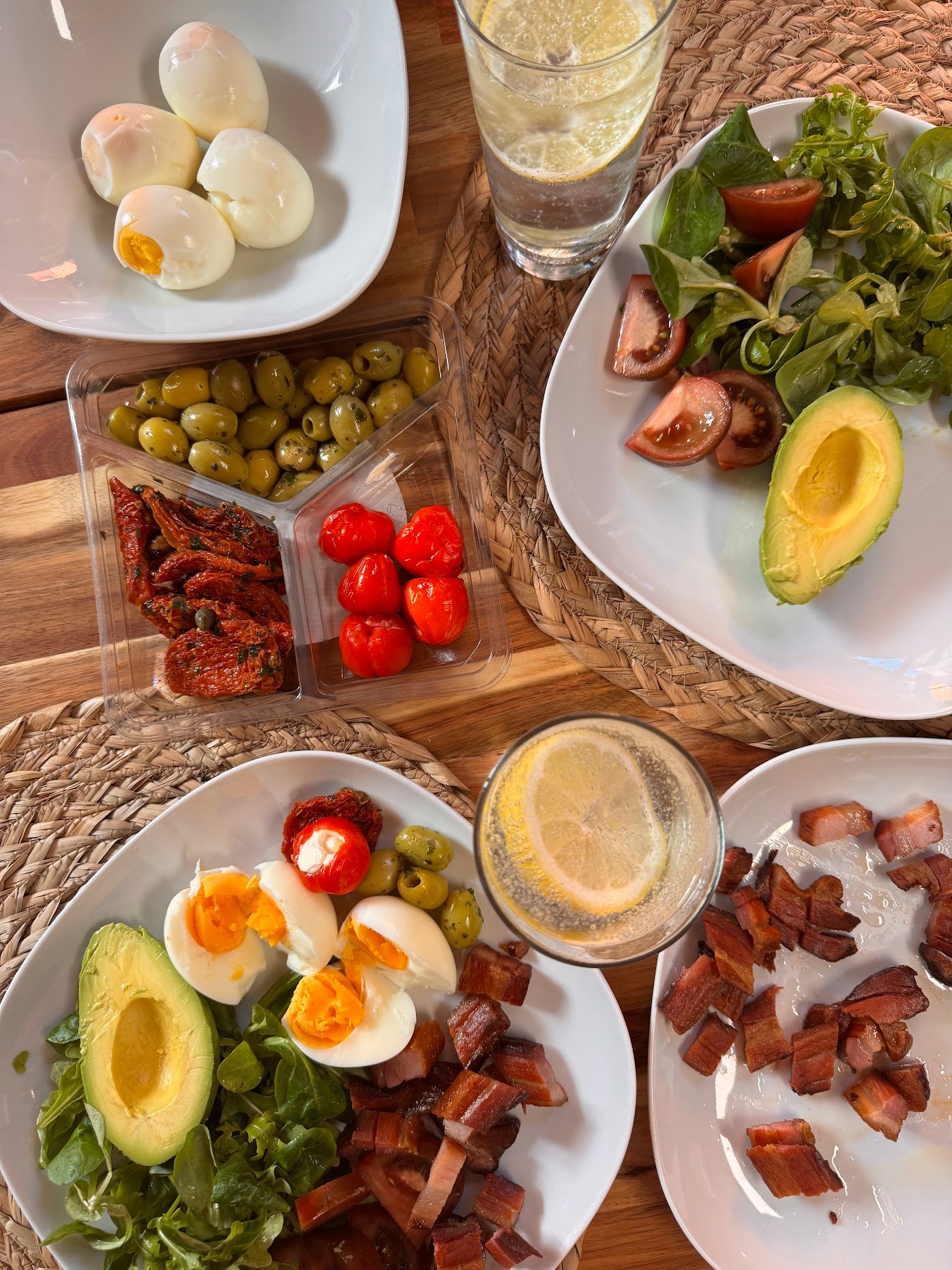
I break my fast with three eggs cooked in olive oil, with sautéed spinach and mushrooms. Sometimes I add a slice of Spanish jamón or some leftover salmon from dinner. A small handful of olives on the side. Black coffee.
This might sound indulgent if you’re used to toast or cereal, but here’s what it does: it stabilizes my blood sugar for hours, keeps me satisfied until lunch, and gives my body the building blocks it needs for hormones and muscle maintenance.
Midday (1-2pm)
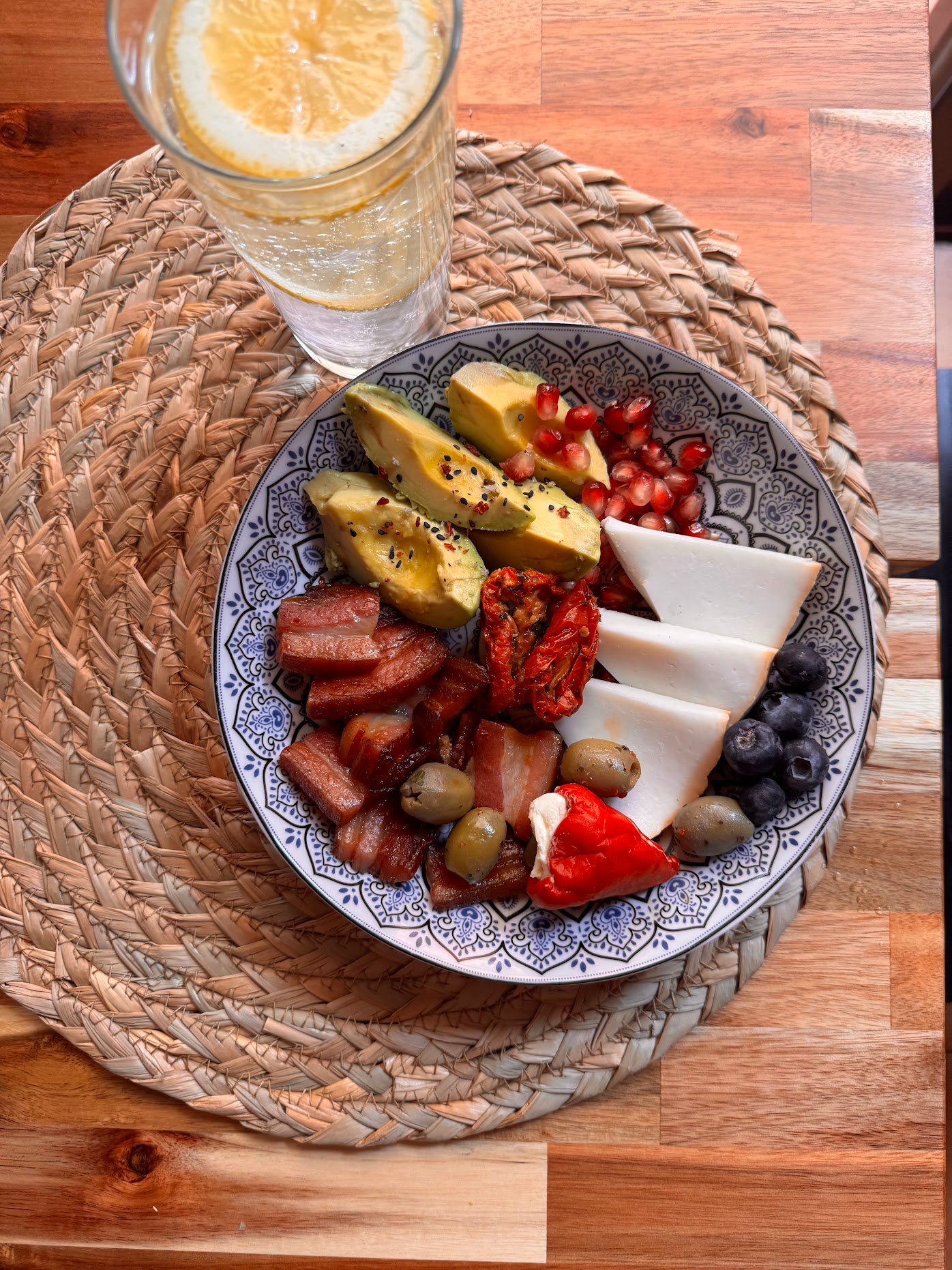
Living in Spain, this is my main meal. A large salad with mixed greens, cucumber, tomatoes, dressed generously with olive oil and vinegar. Then a protein: grilled fish, roasted chicken thighs, or sometimes a Spanish tortilla made with eggs and vegetables. More olive oil drizzled over everything.
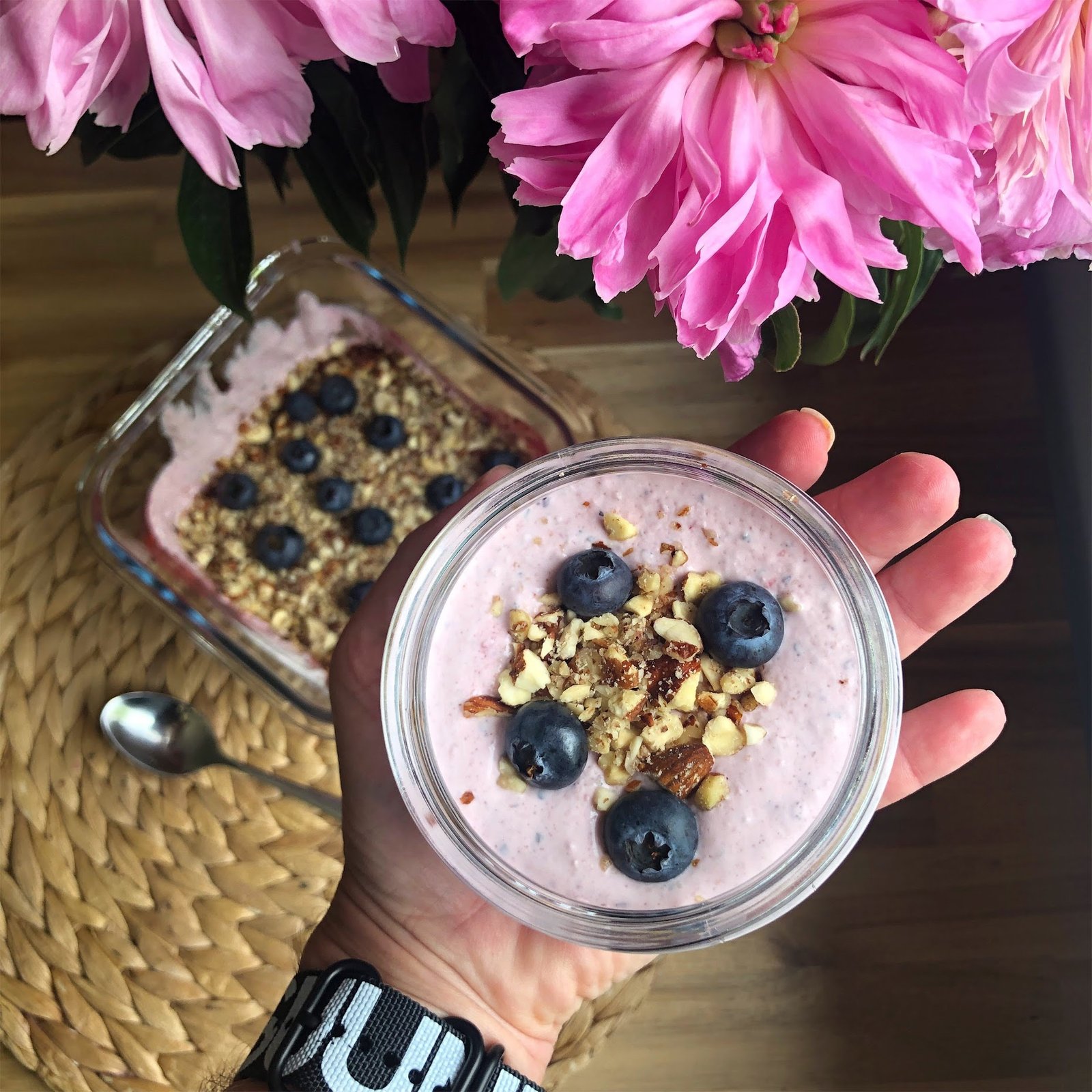
If I’m still hungry, I’ll have some sheep’s cheese or a small bowl of berries with full-fat Greek yogurt.
Anna, who’s 49 and joined my community six months ago, messaged me: “I never realized how little fat I was eating. Now I have olive oil with every meal and I’m not craving sweets at 4pm anymore. That alone feels like a miracle.”
Evening (7-8pm)
Something lighter. Maybe a bowl of vegetable soup made with bone broth, or a smaller portion of protein with roasted vegetables. Zucchini, eggplant, bell peppers, all roasted in olive oil with herbs. Sometimes I’ll have sardines on cucumber slices.
I stop eating by 8pm most nights. Not because I’m following rigid intermittent fasting rules, but because giving my body 12-14 hours without food helps with insulin sensitivity and gives my digestive system a break. A 2024 study in Cell Metabolism found that time-restricted eating specifically benefits glucose metabolism in perimenopausal women.
The Foods That Changed Everything
When I created my perimenopause diet plan, I focused on Mediterranean foods that I could sustain forever. Not keto products. Not meal replacements. Real food that’s been nourishing people for thousands of years.
Extra virgin olive oil is the foundation. I use 3-4 tablespoons daily. I cook with it, dress salads with it, drizzle it over finished dishes. It’s rich in oleic acid and polyphenols that reduce inflammation, which skyrockets during perimenopause.
Fatty fish three to four times a week. Sardines, mackerel, salmon, anchovies. The omega-3s support brain health (goodbye brain fog), reduce inflammation, and help with mood stability. In a perimenopause forum I follow, women constantly ask about depression and anxiety. Omega-3s aren’t a cure, but they’re part of the foundation.
Leafy greens and cruciferous vegetables every single day. Spinach, arugula, kale, broccoli, cauliflower, Brussels sprouts. These contain compounds that help your liver metabolize estrogen more effectively. When your estrogen is all over the place, supporting healthy estrogen metabolism becomes crucial.
Eggs became my friend again after years of avoiding them. Whole eggs with the yolks. They’re one of the most nutrient-dense foods available, containing choline for brain health, vitamin D, and all the essential amino acids your body needs.
Nuts and seeds in moderation. A small handful of almonds or walnuts. Pumpkin seeds on my salad. These provide minerals like magnesium, which many perimenopausal women are deficient in.
What I Don’t Eat (And Why)
My friend Marta, who’s 52 and a teacher in Barcelona, asked me recently: “Is it the foods you added or the foods you removed that made the difference?”
Honestly? Both.
I removed foods that were making my symptoms worse, even though I didn’t realize it at the time. Bread, pasta, rice, and other grains spike my blood sugar and make my hot flashes worse. When I have them now (because yes, sometimes I do), I notice the difference immediately.
Sugar in all its forms had to go. Not just obvious candy and desserts, but the hidden sugars in sauces, yogurts, and “healthy” granola. Sugar feeds inflammation, disrupts sleep, and makes insulin resistance worse.
Processed seed oils like sunflower, soybean, and canola oil. These are in everything here in Spain too, but I cook at home with olive oil or butter. The omega-6 fatty acids in seed oils contribute to inflammation, which we already have too much of in perimenopause.
Most dairy except full-fat options. If I have yogurt, it’s full-fat Greek yogurt. If I have cheese, it’s real aged cheese, usually sheep or goat. Low-fat dairy products are often loaded with sugar and don’t provide the satisfaction or nutrients of the full-fat versions.
How to Adapt This Plan to Your Life
Someone in my Facebook group asked last week: “This sounds great for you in Spain, but I’m in London working 50-hour weeks. How do I make a perimenopause diet plan work in real life?”
I get it. Not everyone can have a leisurely Spanish lunch. Here’s what actually makes this sustainable:
Simplicity over perfection. You don’t need complicated recipes. My dinners are often just a piece of fish seasoned with salt and lemon, cooked in olive oil, with a side of sautéed greens. Ten minutes, total.
Batch cooking works. On Sunday, I might roast a whole chicken, boil a dozen eggs, and roast several trays of vegetables. That’s lunch protein and sides sorted for days.
Keep it minimal. I don’t track macros anymore. I don’t count calories. I eat protein the size of my palm, vegetables until I’m satisfied, and add fat generously. My body has learned to regulate itself when I give it real food.
Plan for social situations. I still go out with friends, have wine occasionally, enjoy life. But I’ve learned that a meal out doesn’t mean I need bread, dessert, and three glasses of wine. I can have grilled fish, a salad, one glass of wine, and feel satisfied without derailing how I feel for the next three days.
The Results Beyond the Scale
Yes, I lost over 40kg. Yes, I’ve maintained that loss for seven years through perimenopause. But honestly, the weight is almost secondary to how I feel now.
My hot flashes reduced by about 70% within three months of changing my diet. They haven’t disappeared—I still get them, especially if I’ve had sugar or too many carbs—but they’re manageable now instead of debilitating.
My energy is stable throughout the day. No 3pm crash that used to have me reaching for coffee and cookies. My sleep improved. Not perfect—perimenopause sleep is its own journey—but I fall asleep easier and wake up less often.
The brain fog that made me forget words mid-sentence? Mostly gone. Research from 2023 in Frontiers in Nutrition found that ketogenic diets can improve cognitive function in perimenopausal women, likely due to stable blood sugar and reduced inflammation.
Eva, a client I’ve been working with for four months, told me last week: “I’ve only lost 6kg, but I feel like a different person. I’m sleeping better, my mood is more stable, and I’m not thinking about food constantly. That’s worth more to me than the number on the scale.”
When It Gets Hard (Because It Does)
Can I be honest about something? There are days when I want pasta. Days when I see fresh bread at the market and I can smell it and I want it badly. Days when I’m tired and emotional and the idea of cooking feels overwhelming.
This isn’t a magic solution that makes everything easy. It’s a framework that makes perimenopause more manageable.
On hard days, I remind myself how I felt at 100kg. How my knees hurt. How I avoided photos. How I felt invisible and exhausted and dismissed by doctors who told me to just eat less.
I also remind myself that this isn’t deprivation. I eat rich, satisfying food. I use real butter and olive oil. I have dark chocolate sometimes. I enjoy meals with friends. This is a way of eating I can sustain forever because it’s based on real food, not restriction.
Your Perimenopause Diet Plan Starts Where You Are
You don’t have to overhaul everything tomorrow. When I started, I just added more olive oil and cut out sugar for two weeks to see how I felt. That’s it. The rest evolved naturally because I felt so much better.
Maybe you start by having eggs for breakfast instead of cereal. Maybe you swap your low-fat yogurt for full-fat. Maybe you cook your vegetables in olive oil instead of steaming them plain. Small changes compound.
The perimenopause diet plan that works is the one you can actually maintain. It’s the one that makes you feel better, not just lighter. It’s the one that works with your changing hormones instead of fighting against them.
You’re not failing at diets. The diets are failing you by ignoring what’s actually happening in your body during this transition.
Your body isn’t broken. It’s changing. And it deserves nourishment that supports that change, not fights it.
If you’re reading this feeling exhausted from trying everything and nothing working, I see you. You’re not alone in this. Thousands of us are navigating this same journey, and we’re finding our way back to ourselves one meal at a time.
Welcome to the community. We’ve been waiting for you.