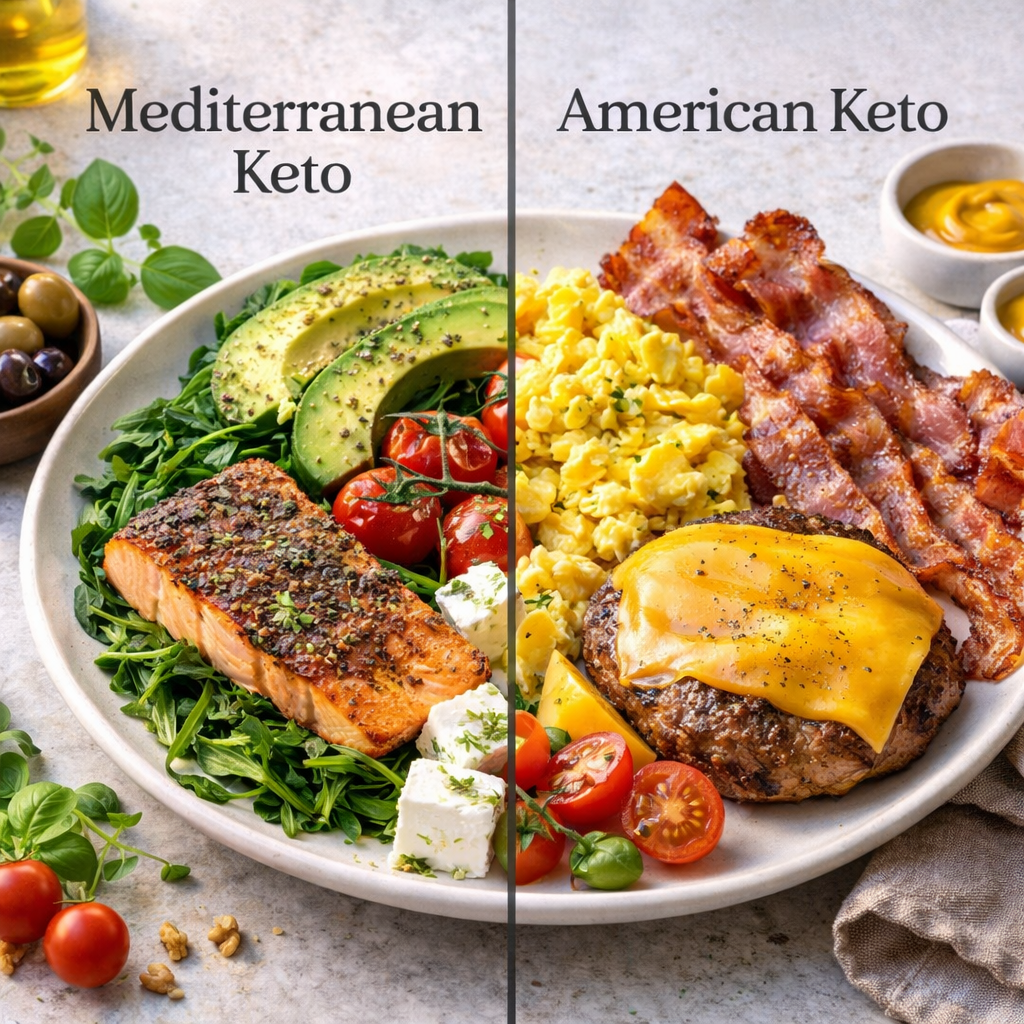
If you’re comparing mediterranean keto vs american keto, you’re asking the right question. Not all ketogenic diets are created equal, and the difference matters enormously for women over 40. Understanding mediterranean keto vs american keto can determine whether you thrive on keto or struggle with it.
This comprehensive guide explores mediterranean keto vs american keto across every dimension—fat sources, protein quality, vegetable intake, sustainability, and results for perimenopause. By the end, you’ll understand exactly why the Mediterranean approach delivers superior outcomes for women navigating hormonal changes.
Table of Contents
Mediterranean Keto vs American Keto: The Core Philosophy
Before diving into specifics of mediterranean keto vs american keto, let’s understand the fundamental philosophical difference.
American Keto Philosophy
American keto asks: “What can I eliminate to stay in ketosis?”
This elimination-focused approach leads to:
- Minimal food variety
- Heavy reliance on bacon, butter, cheese
- Acceptance of processed “keto” products
- Short-term compliance mindset
- Focus on macros over nutrition quality
Mediterranean Keto Philosophy
Mediterranean keto asks: “What has nourished humans for millennia while maintaining ketosis?”
This tradition-focused approach leads to:
- Maximum food variety within keto parameters
- Emphasis on olive oil, fish, vegetables
- Zero processed products
- Sustainable lifestyle mindset
- Focus on both macros AND nutrition quality
This philosophical difference in mediterranean keto vs american keto creates dramatically different outcomes, especially for women over 40.
Mediterranean Keto vs American Keto: Fat Sources
The most critical difference in mediterranean keto vs american keto is where your dietary fat comes from.
American Keto Fat Sources
Primary fats:
- Bacon and bacon fat
- Butter (often grass-fed, but still primarily saturated)
- Heavy cream
- Cheese (large quantities)
- Conventional meat fat
- Industrial seed oils (in processed “keto” products)
Omega-6 to Omega-3 ratio: Often 10:1 or worse (promotes inflammation)
Polyphenol content: Minimal to none
Effect on perimenopause: Can worsen inflammation, may increase joint pain, doesn’t address omega-3 deficiency common in American diet
Mediterranean Keto Fat Sources
Primary fats:
- Extra virgin olive oil (2+ tablespoons daily)
- Fatty fish (salmon, mackerel, sardines 2-3x weekly)
- Avocados
- Olives
- Nuts and seeds (moderate amounts)
- Grass-fed meat fat (minimal amounts)
Omega-6 to Omega-3 ratio: Closer to 3:1 or better (anti-inflammatory)
Polyphenol content: High (from olive oil and vegetables)
Effect on perimenopause: Reduces inflammation, may decrease hot flash frequency by 40-50%, supports brain health, protects cardiovascular system
Why This Difference in Mediterranean Keto vs American Keto Matters
Extra virgin olive oil contains over 30 polyphenolic compounds. These aren’t just antioxidants—they’re anti-inflammatory agents that work similarly to ibuprofen. When comparing mediterranean keto vs american keto, this single difference has profound health implications.
Omega-3 fatty acids from fatty fish provide EPA and DHA—critical for:
- Brain function (addresses brain fog)
- Hormone regulation (supports perimenopause)
- Cardiovascular health (protects heart as estrogen declines)
- Mood stability (reduces depression and anxiety)
- Joint health (reduces inflammation and pain)
American keto provides virtually no EPA/DHA. In mediterranean keto vs american keto, this omega-3 difference alone justifies choosing Mediterranean.
Mediterranean Keto vs American Keto: Protein Quality
The second major difference in mediterranean keto vs american keto is protein source and quality.
American Keto Protein Sources
Typical proteins:
- Bacon (processed meat)
- Sausage (processed meat)
- Hot dogs (highly processed)
- Conventional beef (grain-fed)
- Deli meats (processed, often with fillers)
- Excessive cheese
- Protein powders and shakes
Quality concerns:
- High in AGEs (advanced glycation end products) from processing
- Often contain nitrates/nitrites
- May include inflammatory omega-6 fatty acids
- Minimal omega-3 content
- Processing reduces nutrient bioavailability
Mediterranean Keto Protein Sources
Typical proteins:
- Wild-caught fatty fish (primary protein 2-3x weekly)
- Seafood (shrimp, mussels, octopus, clams)
- Free-range, pasture-raised eggs
- Grass-fed lamb
- Pasture-raised poultry (with skin)
- Grass-fed beef (in moderation)
- Small amounts of sheep or goat cheese
Quality benefits:
- Minimal processing
- Higher omega-3 content (especially fish)
- Better omega-6 to omega-3 ratio
- Higher micronutrient density
- More bioavailable nutrients
Why Protein Quality Matters in Mediterranean Keto vs American Keto
For women over 40, protein quality affects:
Muscle preservation: Higher quality protein with better amino acid profiles supports muscle maintenance during perimenopause when estrogen’s muscle-preserving effects decline.
Inflammation: Processed meats increase inflammatory markers. Fresh fish decreases them. In mediterranean keto vs american keto, this creates opposite inflammatory effects.
Brain health: DHA from fish is literally a building block of brain cells. American keto provides zero DHA. Mediterranean keto provides abundant DHA.
Hormonal balance: Wild-caught fish is lower in endocrine disruptors compared to conventional meat. Important for women with already disrupted hormones.
Mediterranean Keto vs American Keto: Vegetable Intake
This might be the most visible difference when comparing mediterranean keto vs american keto.
American Keto Vegetable Approach
Typical intake: 1-3 servings daily (often just lettuce)
Philosophy: “Vegetables are wasted carbs”
Common vegetables:
- Iceberg lettuce
- Small amounts of broccoli or cauliflower
- Occasional spinach
Fiber intake: Often inadequate (10-15g daily)
Micronutrients: Frequently deficient in magnesium, potassium, vitamin C
Mediterranean Keto Vegetable Approach
Typical intake: 7-10 servings daily
Philosophy: “Vegetables provide essential nutrients while maintaining ketosis”
Common vegetables:
- Tomatoes (yes, despite being nightshades)
- Eggplant
- Zucchini
- Bell peppers (all colors)
- Spinach, arugula, kale
- Broccoli, cauliflower
- Asparagus
- Artichokes
- Mushrooms
- Cucumber
Fiber intake: Optimal (25-30g daily)
Micronutrients: Exceeds RDA for most vitamins and minerals
Why Vegetable Intake Matters in Mediterranean Keto vs American Keto
Gut health: Fiber and polyphenols from vegetables feed beneficial gut bacteria. Your gut microbiome metabolizes hormones—crucial during perimenopause. Mediterranean keto vs american keto shows dramatically different gut health outcomes.
Magnesium: Critical for sleep, hot flash management, and bone health. Depleted during perimenopause. Mediterranean vegetables provide abundant magnesium; american keto often creates deficiency.
Potassium: Prevents “keto flu,” supports heart health, regulates blood pressure. Mediterranean keto provides 3,000-4,000mg daily; american keto often under 2,000mg.
Antioxidants: Combat oxidative stress that increases during perimenopause. Colorful Mediterranean vegetables provide diverse antioxidants; american keto provides minimal.
Mediterranean Keto vs American Keto: Sample Day Comparison
Seeing mediterranean keto vs american keto side-by-side clarifies the differences.
American Keto Sample Day
Breakfast:
- 4 strips bacon
- 2 eggs fried in butter
- 1 slice “keto bread” (almond flour, xanthan gum, artificial sweeteners)
- Coffee with heavy cream
Macros: 520 kcal | 44g fat | 28g protein | 4g net carbs
Vegetables: 0 servings
Omega-3s: Minimal
Processed foods: Keto bread
Lunch:
- Bunless bacon cheeseburger (grain-fed beef)
- Side salad with iceberg lettuce
- Ranch dressing (made with soybean oil)
- Pork rinds
Macros: 680 kcal | 52g fat | 48g protein | 5g net carbs
Vegetables: 1 serving (lettuce)
Omega-3s: None
Processed foods: Pork rinds, ranch dressing
Dinner:
- Ribeye steak with butter
- Small side of broccoli
- “Keto” dessert (processed sweeteners, modified starches)
Macros: 820 kcal | 68g fat | 52g protein | 6g net carbs
Vegetables: 1 serving
Omega-3s: Minimal
Processed foods: Keto dessert
Daily Total: 2,020 kcal | 164g fat | 128g protein | 15g net carbs
Vegetables: 2 servings
Omega-3 intake: <500mg (inadequate)
Fiber: 12g (low)
Polyphenols: Minimal
Mediterranean Keto Sample Day
Breakfast:
- 3 eggs scrambled in 1 tbsp extra virgin olive oil
- Sautéed spinach and tomatoes
- Crumbled feta
- Fresh basil
- Sliced avocado
Macros: 420 kcal | 32g fat | 25g protein | 6g net carbs
Vegetables: 2 servings (spinach, tomatoes)
Omega-3s: Good (from eggs if pasture-raised)
Processed foods: Zero
Lunch:
- 6oz wild-caught salmon fillet (grilled with herbs)
- Large Greek salad (mixed greens, cucumber, tomatoes, olives, red onion)
- 2 tbsp extra virgin olive oil + lemon dressing
- Crumbled feta
Macros: 580 kcal | 42g fat | 44g protein | 8g net carbs
Vegetables: 4 servings
Omega-3s: Excellent (~2,000mg EPA/DHA)
Processed foods: Zero
Dinner:
- Herb-crusted lamb chops (rosemary, thyme, garlic)
- Roasted Mediterranean vegetables (zucchini, eggplant, bell peppers) in olive oil
- Sautéed spinach with garlic
- Small portion of olives
Macros: 650 kcal | 48g fat | 52g protein | 12g net carbs
Vegetables: 4+ servings
Omega-3s: Moderate (from grass-fed lamb)
Processed foods: Zero
Daily Total: 1,650 kcal | 122g fat | 121g protein | 26g net carbs
Vegetables: 10+ servings
Omega-3 intake: ~2,500mg (optimal)
Fiber: 28g (excellent)
Polyphenols: High (from olive oil, vegetables)
What This Mediterranean Keto vs American Keto Comparison Shows
Nutrient density: Mediterranean provides 5x more vegetable servings, vastly superior micronutrient profile
Inflammation: American promotes (processed meats, omega-6 oils); Mediterranean reduces (omega-3s, polyphenols)
Sustainability: Mediterranean offers variety and satisfaction; American becomes monotonous
Processed foods: American includes 3 processed items; Mediterranean zero
Real food: Mediterranean 100%; American ~70%
Mediterranean Keto vs American Keto: Health Outcomes for Women 40+
Research comparing mediterranean keto vs american keto shows different outcomes.
American Keto Typical Results
Short-term (Weeks 1-4):
- Rapid water weight loss (exciting but temporary)
- Possible “keto flu” from electrolyte imbalance
- Energy fluctuations
- Some report feeling “off”
Medium-term (Months 2-4):
- Weight loss plateaus
- Possible increased LDL cholesterol (from saturated fat excess)
- Boredom with food choices
- Social eating becomes challenging
- Many quit
Long-term (Months 6+):
- Only 30-40% still following diet
- Often regain weight after stopping
- May develop nutrient deficiencies (magnesium, potassium, vitamin C)
- Gut microbiome diversity may decrease
Mediterranean Keto Typical Results
Short-term (Weeks 1-4):
- Steady weight loss begins
- Less severe “keto flu” (higher potassium/magnesium from vegetables)
- Energy stabilizes quickly
- Mental clarity improves
- Hot flashes may begin decreasing
Medium-term (Months 2-4):
- Consistent weight loss continues
- Inflammation markers decrease
- Skin may improve (from healthy fats and vegetables)
- Sleep quality improves
- Mood stabilizes
- Diet feels sustainable
Long-term (Months 6+):
- 70-85% still following diet
- Weight maintenance becomes natural
- Perimenopause symptoms significantly improved
- Gut health maintained/improved
- Becomes lifestyle, not diet
Research: Spanish Ketogenic Mediterranean Diet (SKMD)
When examining mediterranean keto vs american keto through research, the Spanish Ketogenic Mediterranean Diet (studied since 2008) shows:
Weight loss: More sustainable with better long-term maintenance
Cardiovascular health: Improved lipid profiles, reduced inflammation markers, better arterial health
Metabolic health: Enhanced insulin sensitivity superior to standard keto
Compliance: 85% adherence at 2 years vs 60% for standard keto
Quality of life: Significantly better reported well-being, energy, and satisfaction
Mediterranean Keto vs American Keto: Cost Comparison
Many assume mediterranean keto vs american keto means higher cost. Let’s examine reality.
American Keto Weekly Cost (Estimated)
- Bacon (2 lbs): $12
- Eggs (2 dozen): $8
- Butter (2 lbs): $10
- Cheese (2 lbs): $16
- Ground beef (3 lbs): $18
- Keto bread (2 loaves): $16
- Keto bars/snacks: $25
- Pork rinds: $8
- Ranch dressing: $6
- Protein powder: $15
- Heavy cream: $8
Weekly total: ~$142
Mediterranean Keto Weekly Cost (Estimated)
- Extra virgin olive oil (1 liter): $18
- Wild salmon (1.5 lbs): $24
- Canned sardines/mackerel: $8
- Eggs (18): $6
- Vegetables (abundant variety): $25
- Avocados (7): $10
- Olives: $8
- Feta cheese (8 oz): $7
- Free-range chicken thighs (2 lbs): $12
- Grass-fed lamb (1 lb): $15
- Fresh herbs: $6
Weekly total: ~$139
The Mediterranean Keto vs American Keto Cost Reality
Similar overall cost, but mediterranean keto provides:
- Higher nutrient density
- Better quality ingredients
- Zero processed junk
- Superior health outcomes
The perceived cost difference in mediterranean keto vs american keto is largely myth. You eliminate expensive processed “keto” products and replace with real food.
Budget tip: Canned sardines and mackerel cost $2-4 per can and provide more omega-3s than expensive fresh salmon. Mediterranean keto can be very affordable.
Mediterranean Keto vs American Keto: Which is Right for You?
When deciding between mediterranean keto vs american keto, consider:
Choose Mediterranean Keto If:
✅ You’re over 40 (especially in perimenopause)
✅ You have inflammatory symptoms (joint pain, hot flashes)
✅ You want long-term sustainability
✅ You value food quality and variety
✅ You want cardiovascular protection
✅ You’re willing to prepare real food
✅ You want proven research backing
Choose American Keto If:
❓ You’re young with no health issues (though Mediterranean is still better)
❓ You prioritize convenience over quality
❓ You’re okay with processed foods
❓ You don’t mind monotonous eating
❓ You have short-term weight loss goals only
Honestly? For women over 40, Mediterranean keto is superior in virtually every measurable way when comparing mediterranean keto vs american keto.
Making the Switch: Mediterranean Keto vs American Keto Transition
If you’re currently doing American keto, here’s how to transition in the mediterranean keto vs american keto journey:
Week 1: Replace butter with extra virgin olive oil
Week 2: Add fatty fish 2x this week
Week 3: Eliminate all packaged “keto” products
Week 4: Double vegetable intake
Week 5: Focus on fresh herbs instead of processed seasonings
Week 6: Fully transitioned to Mediterranean approach
What you’ll notice:
- More energy
- Better digestion
- Improved skin
- Less inflammation
- Greater satisfaction
- Easier to maintain
The Bottom Line: Mediterranean Keto vs American Keto
When comparing mediterranean keto vs american keto, the Mediterranean approach wins for women over 40 across every dimension:
Fat quality: Olive oil and fish > bacon and butter
Protein quality: Fresh fish and eggs > processed meats
Micronutrients: 10 vegetable servings > 2 lettuce servings
Inflammation: Anti-inflammatory > pro-inflammatory
Sustainability: 85% compliance > 60% compliance
Health outcomes: Superior in all measures
Research backing: 15+ years SKMD studies
The question of mediterranean keto vs american keto has a clear answer: Mediterranean delivers better results, better health, and better sustainability for women navigating perimenopause.
You deserve better than bacon and butter. You deserve the olive oil, fresh fish, and abundant vegetables that have nourished Mediterranean cultures for millennia. You deserve Mediterranean keto.
Disclaimer: This article is for informational purposes only. Consult your healthcare provider before making dietary changes. Individual results may vary based on compliance, overall health status, and other factors.