Last Tuesday morning, I stood in my kitchen in Spain staring at the fridge, completely paralyzed. I’d just woken up drenched in sweat for the third night in a row, my brain felt like it was wrapped in cotton wool, and I honestly couldn’t remember if I’d already had breakfast or not. This is the reality of my perimenopause diet journey at 46—some days I have it figured out, and some days I’m googling “can you forget your own name in perimenopause” at 7am.
Seven years ago, I lost over 40kg with keto. I felt invincible. Then perimenopause arrived like an uninvited guest who brought chaos and stayed too long. Suddenly, the approach that had worked so beautifully stopped working. My body had new rules, and I hadn’t been given the manual.
What I’ve learned—through my own stumbling, countless conversations with women in my community, and yes, some proper research—is that a perimenopause diet isn’t about restriction. It’s about working with your shifting hormones instead of against them. And for me, that meant going back to my Mediterranean roots.
When Everything That Worked… Stops Working
A woman named Sofia messaged me last month in tears. She’s 48, lives in Madrid, and had been doing strict keto for three years with amazing results. Then six months ago, everything changed. She was following the exact same plan, but suddenly she was gaining weight around her middle, her sleep was terrible, and she felt anxious all the time.
“I feel like my body is broken,” she wrote. “Nothing makes sense anymore.”
I knew exactly what she meant because I’d been there. Around 44, my reliable keto approach started feeling like I was fighting my own body. I was tired despite sleeping, hungry despite eating, and my clothes were getting tighter despite doing everything “right.”
Here’s what nobody tells you: perimenopause changes the game completely. As estrogen starts its erratic dance—surging one week, plummeting the next—your metabolism, insulin sensitivity, and even how you process fat all shift. A 2023 study published in the Journal of Clinical Endocrinology found that metabolic rate can drop by up to 250 calories per day during the perimenopausal transition, even without changes in activity level.
That’s not a minor adjustment. That’s your body rewriting its operating system while you’re still trying to use it.
The Mediterranean Advantage I’d Forgotten
Living in Spain, I’m surrounded by women who seem to glide through midlife with more grace than I was managing. I started paying attention to what they were eating, and more importantly, how they were eating.
My neighbor Carmen is 54 and full of energy. She doesn’t count macros or avoid carbs religiously. But she does drizzle exceptional olive oil on everything, eats fish at least four times a week, and her idea of dessert is usually a few squares of dark chocolate with espresso.
I started shifting my strict keto approach to what I now call Mediterranean keto—a perimenopause diet that honors both the metabolic benefits of lower-carb eating and the anti-inflammatory, hormone-supporting power of Mediterranean foods.
The difference wasn’t just physical. Within a few weeks, I felt less like I was white-knuckling through a diet and more like I was actually nourishing my changing body.
What Actually Goes On My Plate Now
Someone in my Facebook group asked me last week: “But what do you actually eat? I need specifics, not just philosophy.”
Fair question. Here’s what my typical day looks like now, though I want to be clear—this evolved over time, and your body might need something different.
Morning: Breaking the Fast Gently
I usually don’t eat until 10 or 11am. Not because I’m forcing intermittent fasting, but because my appetite naturally shifted during perimenopause. I used to wake up ravenous; now my hunger doesn’t kick in until mid-morning.
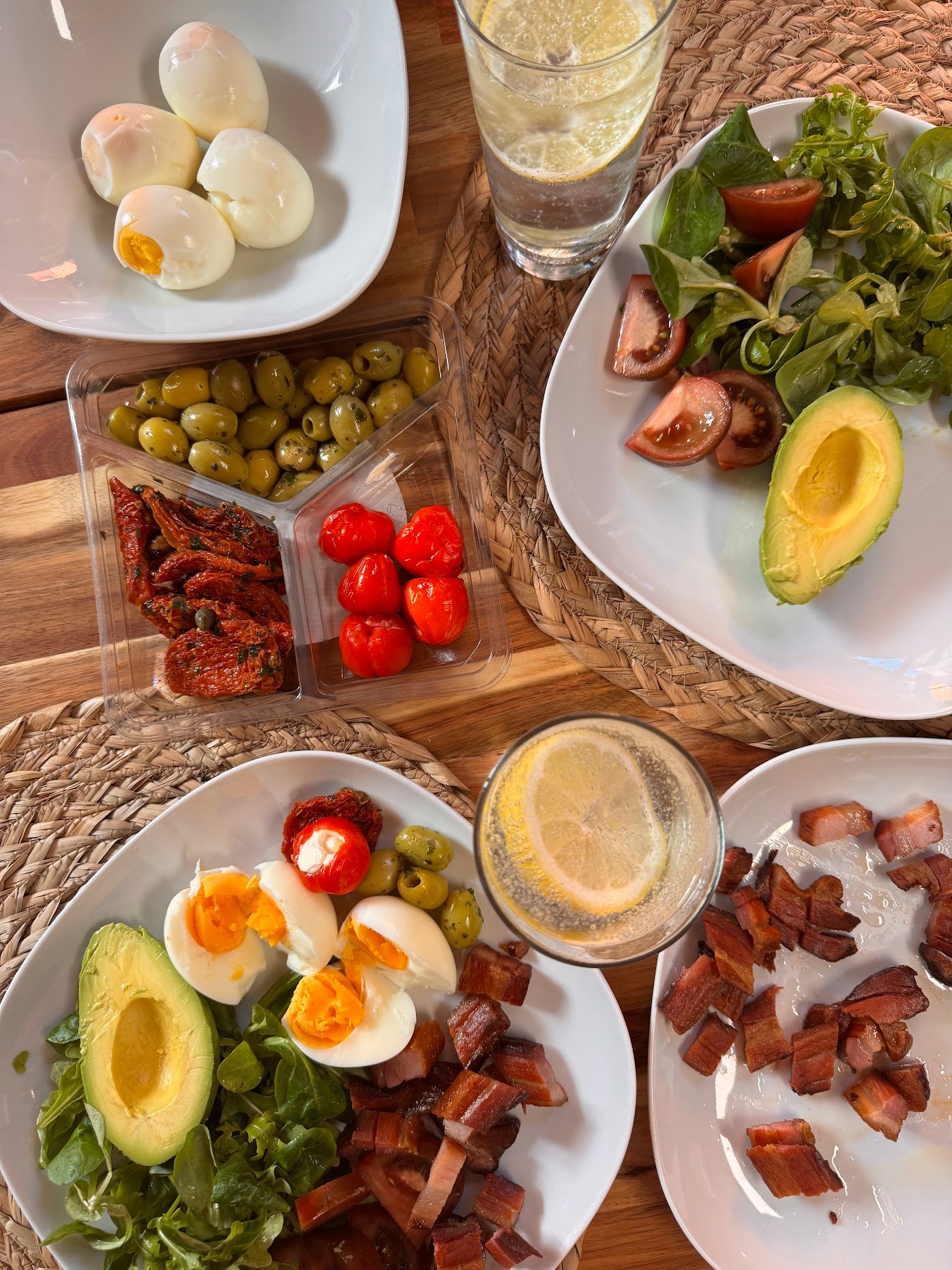
When I do eat, it’s substantial: three eggs scrambled in Spanish olive oil with spinach and tomatoes, topped with crumbled feta. Sometimes I’ll add leftover grilled vegetables from dinner. I’ve learned that protein at this first meal—at least 30 grams—keeps my energy stable and reduces those afternoon carb cravings that used to derail me.
Research from the University of Illinois found that women in perimenopause who consumed 30+ grams of protein at breakfast had better muscle mass retention and more stable blood sugar throughout the day compared to those who ate lighter, carb-focused breakfasts.
Afternoon: The Critical Window
This is where I used to fall apart. That 3pm slump would hit, and I’d either reach for something sweet or just suffer through with terrible brain fog.
Now I eat lunch around 2pm (very Spanish of me), and it’s become my anchor meal. Usually it’s a huge salad with a protein source—grilled sardines, anchovies, or leftover roasted chicken—loaded with vegetables, olives, capers, and dressed generously with olive oil and lemon juice.
A woman I was coaching—let’s call her Lucia—was skeptical about eating fish so often. “Won’t I get bored?” she asked. But she tried it for two weeks and messaged me: “I haven’t had an afternoon energy crash in nine days. NINE DAYS. I didn’t know that was possible.”
The omega-3s in fatty fish seem to be particularly important for perimenopause. They help with inflammation, support brain function (goodbye, brain fog), and there’s evidence they may help moderate hot flashes.
Evening: Satisfaction Without Stuffing
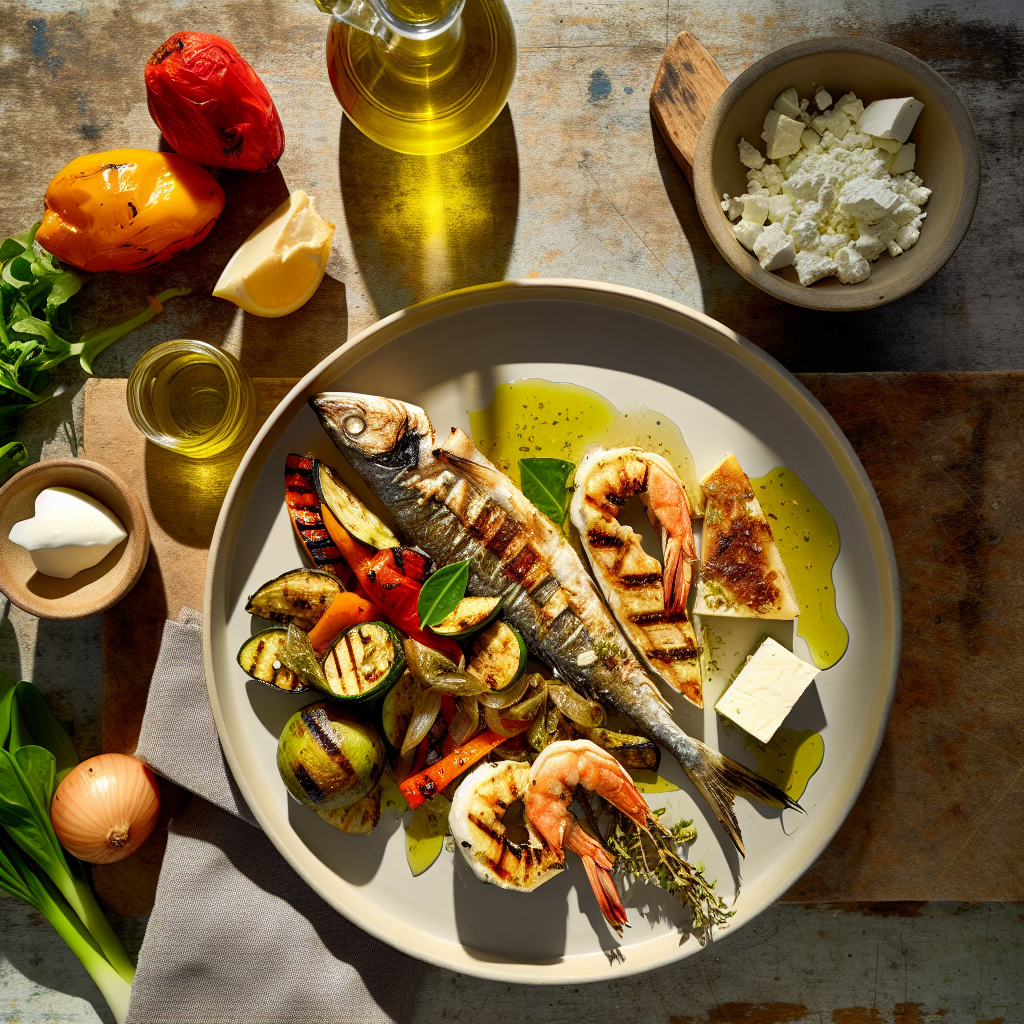
Dinner is lighter now, usually around 8pm. It might be grilled fish with roasted vegetables—zucchini, bell peppers, eggplant—all drizzled with olive oil and sprinkled with herbs from my tiny balcony garden.
Or sometimes it’s what I call a “tapas plate”—a selection of things that would make a traditional keto person nervous because they’re not macro-perfect, but they work: some jamón ibérico, manchego cheese, marinated artichokes, roasted red peppers, a handful of marcona almonds.
I’ve stopped eating after 8:30pm, not because of some rule, but because I sleep better that way. And sleep, I’ve learned, is non-negotiable for managing perimenopausal symptoms.
The Olive Oil Revelation
I need to talk specifically about olive oil because it’s become central to my perimenopause diet in a way I didn’t expect.
I use a lot of it—probably 4-5 tablespoons a day. I know that sounds like a lot, but quality olive oil isn’t just fat calories. Extra virgin olive oil contains polyphenols that act almost like medicine in your body, reducing inflammation and supporting heart health at a time when declining estrogen is making cardiovascular issues more likely.
A 2024 study in the journal Menopause followed 650 women through the perimenopausal transition and found that those who consumed at least 3 tablespoons of extra virgin olive oil daily had significantly fewer hot flashes and better lipid profiles than women consuming less.
I saw a Reddit post last month where a woman was trying to do keto with only coconut oil and butter because they were “cleaner” somehow. It made me sad because she was missing out on one of the most powerful tools we have for navigating this transition.
What I’ve Mostly Let Go
This is harder to talk about than what I’ve added, but it’s just as important.
I’ve released my grip on traditional keto foods that aren’t actually nourishing. No more almond flour pancakes trying to be “real” pancakes. No protein bars or keto treats that come in packages with ingredient lists I can’t pronounce.
My friend Marta, who’s 52 and teaches high school in Barcelona, was living on keto products—the bars, the shakes, the “bread” made from weird fibers. She felt terrible and couldn’t understand why keto wasn’t working for her anymore.
When she switched to real food—the fish, the vegetables, the olive oil, the occasional serving of white beans or lentils—everything changed. She lost the stubborn 8kg she’d been fighting, her hot flashes decreased, and she stopped feeling so irritable all the time.
“I was so focused on staying under 20 grams of carbs that I forgot to actually eat real food,” she told me over coffee last week.
The Carbohydrate Conversation Nobody’s Having
Here’s something controversial in the keto world: I eat some carbohydrates now, and my body is better for it.
Not bread or pasta or cookies. But I’ll have a small potato with dinner once or twice a week. Sometimes I’ll include chickpeas in a salad or a small amount of white rice with my fish.
I keep it under 75-100 grams of total carbs most days, which is higher than strict keto but lower than standard eating. For my perimenopausal body, this seems to be the sweet spot where I maintain stable blood sugar, have enough energy for strength training, and don’t feel deprived.
A woman in a perimenopause forum wrote something that stuck with me: “I’m so tired of fighting my body. Can’t I just feed it and be friends again?”
Yes. That’s exactly what a good perimenopause diet should do—make peace with your changing body instead of declaring war on it.
Timing Matters More Than I Realized
When I eat has become almost as important as what I eat. Not because of some rigid intermittent fasting protocol, but because my perimenopausal body seems to have strong opinions about timing.
I naturally fell into eating within about an 8-10 hour window most days—usually between 10am and 8pm. This gives my digestion a break and seems to help with sleep quality, which is crucial when night sweats are already disrupting things.
But I’m not dogmatic about it. If I’m genuinely hungry at 9am, I eat. If we’re having dinner with friends at 9:30pm, I don’t stress about it. The goal is supporting my body, not adding more rules to follow.
Anna, a client of mine who’s 49, was doing strict 16:8 fasting every single day and feeling exhausted. When she gave herself permission to be more flexible—eating breakfast on days she was truly hungry, extending her eating window when she needed to—her energy improved dramatically.
“I didn’t realize how much stress I was adding by being so rigid,” she told me. “And stress is basically gasoline on the perimenopausal fire.”
The Movement Connection
This isn’t purely about diet, but I can’t talk about my perimenopause approach without mentioning movement because they’re so interconnected.
I used to do long cardio sessions, thinking more was better. Now I lift weights three times a week—nothing fancy, just 30-40 minutes with dumbbells at home—and I walk daily. That’s it.
The strength training seems to work synergistically with my higher protein intake to maintain muscle mass, which is disappearing at an alarming rate in perimenopause if you don’t actively fight it. And muscle mass is metabolically active tissue—it helps keep your metabolism from completely tanking.
I walk in the late afternoon, usually around 6pm, which helps manage that cortisol spike that many perimenopausal women experience in the evening. It clears my head, helps me sleep better, and honestly, it’s when I do my best thinking.
What This Isn’t
I want to be really clear: this isn’t a perfect, one-size-fits-all solution. There are still days when I wake up and my body feels like a stranger. Days when I’m bloated for no clear reason, or when my anxiety is high despite doing everything “right.”
Perimenopause is messy and unpredictable, and no diet will change that completely. What this approach has given me is a foundation—a way of eating that supports my body most of the time, reduces the severity of symptoms, and doesn’t make me feel deprived or restricted.
Someone commented on one of my Instagram posts: “This sounds too simple to work.” And I get that skepticism because we’ve been taught that transformation requires suffering. But maybe, especially now in perimenopause, simple is exactly what works.
Where I Am Now
It’s been about 18 months since I shifted to this Mediterranean-focused perimenopause diet approach, and I’m not going to lie and say everything is perfect. I still have hot flashes, though they’re less frequent and less intense. My sleep is better but not great. My weight is stable, which at this stage of life feels like a victory.
What’s really changed is my relationship with food and with my body. I’m not constantly fighting or restricting or trying to force my 46-year-old perimenopausal body to behave like my 39-year-old pre-perimenopausal body.
Last week, I made grilled sardines with a massive Greek-style salad for lunch. I ate slowly, tasted every bite, felt satisfied but not stuffed. Two years ago, I would have been calculating macros and feeling guilty about the tomatoes. Now I just eat and feel grateful that my body still tells me what it needs if I’m willing to listen.
This is what I wish someone had told me when perimenopause first started changing everything: you don’t need a stricter diet or more willpower or a more extreme approach. You need real food, prepared simply, eaten with attention and without guilt. You need to stop fighting your changing body and start supporting it.
If you’re struggling right now—if you feel like nothing works anymore and your body has betrayed you—I want you to know you’re not broken. Your body is doing something incredibly complex and difficult, and it needs support, not punishment. You deserve to eat food that nourishes you without obsessing over every bite. You deserve to feel good in your changing body.
And you’re not alone in this. Thousands of us are figuring this out together, one meal at a time.