You know that feeling when you wake up at 3am drenched in sweat, wide awake, and you just know sleep isn’t coming back? I spent two years like that. Two years of exhaustion so deep I could barely function, but the moment my head hit the pillow, my brain decided it was time to solve every problem I’d ever had. I tried everything—magnesium, melatonin, meditation apps, blackout curtains. Nothing worked consistently. Then I realized I was approaching this all wrong. The solution wasn’t in supplements or sleep hygiene tricks. It was sitting right there in my kitchen, in the perimenopause sleep foods I’d been ignoring.
What finally changed everything wasn’t a pill or a gadget. It was understanding how the Mediterranean foods I’d grown to love here in Spain could work with my changing hormones instead of against them.
Why Perimenopause Ruins Your Sleep (And Why Food Matters More Than You Think)
I need to be honest about something: I spent months blaming my sleep problems on stress, on my age, on everything except what I was eating. A woman in my Facebook group changed my perspective completely when she posted about tracking her sleep and meals together. She discovered her blood sugar was crashing every night around 2am, triggering a cortisol spike that jolted her awake.
That’s when I started connecting the dots.
The Hormone-Sleep Connection Nobody Talks About
Here’s what’s actually happening in our bodies during perimenopause: declining estrogen doesn’t just give us hot flashes. It fundamentally changes how our bodies regulate temperature, manage stress hormones, and maintain steady blood sugar levels. Research from the National Sleep Foundation shows that up to 61% of perimenopausal women experience insomnia, and it’s directly linked to these hormonal shifts.
When your estrogen drops, your cortisol patterns get disrupted. You know what else affects cortisol? Blood sugar crashes. And guess what causes blood sugar crashes at night? The wrong evening foods, even if they’re technically “keto.”
I learned this the hard way when my doctor looked at my continuous glucose monitor data and pointed out the roller coaster happening every single night.
Why Your Old Sleep Tricks Stopped Working
My friend Marta, who’s 52 and teaches high school in Barcelona, told me something that hit hard: “I’ve been taking the same magnesium supplement for five years. It used to work perfectly. Now? Nothing.” She’s not alone. What worked in our 30s stops working in perimenopause because our bodies have fundamentally changed.
The problem isn’t that magnesium stopped being important. It’s that we need a more comprehensive approach that addresses multiple hormone pathways at once. And that’s where perimenopause sleep foods come in—they work on several levels simultaneously.
How Mediterranean Foods Support Sleep Hormones
A 2023 study published in the Journal of Clinical Endocrinology found that omega-3 fatty acids from fish significantly improved sleep quality in perimenopausal women by supporting melatonin production and reducing inflammation. But here’s what the study didn’t emphasize enough: it matters which foods you choose and when you eat them.
Mediterranean foods aren’t just healthy in a vague, general way. They contain specific nutrients—magnesium, tryptophan, omega-3s, B vitamins—that directly support the production of sleep hormones. And they stabilize blood sugar in a way that keeps cortisol from spiking at 2am.
The 8 Perimenopause Sleep Foods I Keep in My Spanish Kitchen
Let me walk you through the specific foods that changed my nights. These aren’t exotic ingredients or expensive supplements. They’re real Mediterranean staples that you can find at any market.
Fatty Fish: Your Sleep Hormone’s Best Friend
Sardines, mackerel, and salmon became my dinner staples for a reason. They’re loaded with omega-3 fatty acids (specifically DHA) that support melatonin production and help regulate your circadian rhythm. But there’s more: they also provide vitamin D, which works with melatonin to improve sleep quality.
I eat fatty fish at least four times a week now, usually for dinner. My go-to is sardines straight from the tin, drizzled with olive oil and lemon juice, served over arugula. Simple, fast, and I noticed a difference within a week of making this consistent.
Research from Oxford University found that people who ate fatty fish three times a week fell asleep an average of 30 minutes faster than those who didn’t. For perimenopausal women specifically, the anti-inflammatory effects help reduce night sweats too.
Extra Virgin Olive Oil: The Evening Ritual That Changed Everything
This one surprised me. I was already using olive oil for cooking, but I started taking a tablespoon straight before bed, sometimes mixed with a bit of Greek yogurt. Sounds odd, I know. But olive oil contains oleocanthal, a compound that reduces inflammation, and it provides steady fat that keeps your blood sugar stable through the night.
Anna from my community messaged me last month saying she tried this and finally slept through the night for the first time in six months. The key is good quality, real extra virgin olive oil—not the processed stuff in plastic bottles.
Leafy Greens: More Than Just Salad
Spinach, kale, and Swiss chard are loaded with magnesium, and most perimenopausal women are deficient in magnesium without realizing it. But here’s what I didn’t know: you need to eat them with fat for your body to actually absorb that magnesium.
I sauté a huge pile of spinach in olive oil almost every evening now, sometimes with garlic, sometimes plain. It’s become my favorite side dish because I can feel the difference. That tight, wired feeling I used to get at night? Gone.
The calcium in leafy greens also helps your brain use tryptophan to manufacture melatonin. It’s all connected.
Almonds and Walnuts: The 3pm Snack Strategy
I had to learn this through trial and error: when you eat these matters as much as eating them at all. Almonds and walnuts both contain melatonin naturally, plus magnesium and healthy fats. But if I ate them too close to bedtime, I’d feel too full to sleep comfortably.
Now I have a small handful (about 10-12 nuts) around 3 or 4pm. It stabilizes my blood sugar through the evening, preventing that pre-dinner crash that used to have me reaching for carbs. Walnuts specifically contain omega-3s in the form of ALA, which supports the same sleep pathways as fish.
Greek Yogurt: The Protein-Fat Combo That Keeps You Sleeping
Full-fat Greek yogurt became my secret weapon against 2am wake-ups. It provides casein protein, which digests slowly and keeps your blood sugar steady for hours. The calcium helps your brain produce melatonin, and the fat ensures you’re not getting a protein spike without balance.
I eat a small bowl (about half a cup) about two hours before bed, usually with a few walnuts or a drizzle of olive oil. Sounds strange until you try it. A client told me she was skeptical but tried it anyway—she texted me three days later saying it was “almost magical” how much better she was sleeping.
Eggs: Not Just for Breakfast Anymore
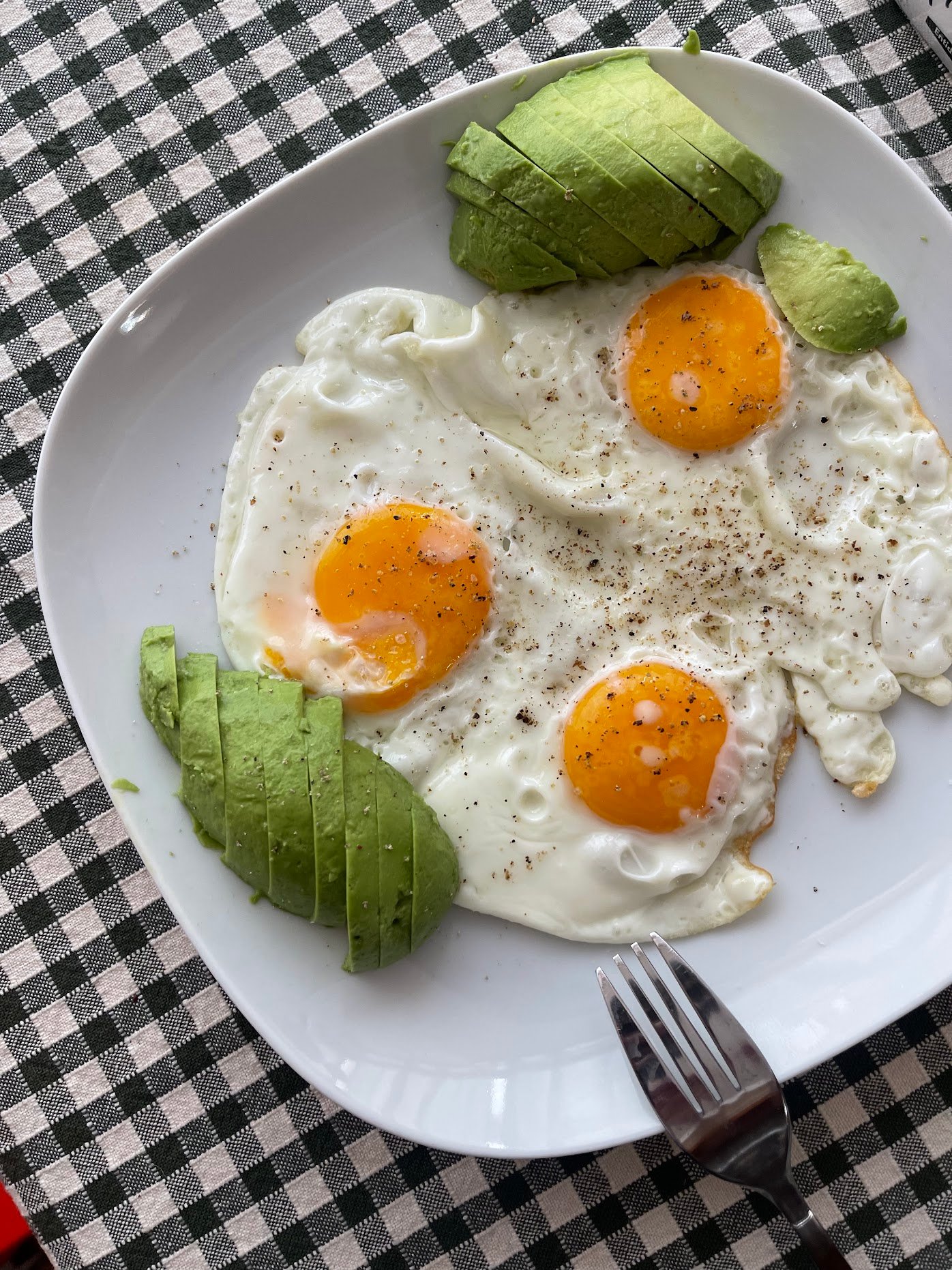
This goes against conventional wisdom, but eating eggs in the evening works beautifully for sleep. They’re rich in tryptophan and vitamin D, and the protein-fat combination is perfect for blood sugar stability. I’ll often have a two-egg omelet with spinach and feta for dinner, or even just two hard-boiled eggs with olive oil and sea salt as an evening snack.
The key is eating them with vegetables and fat, not alone. That combination supports steady serotonin and melatonin production throughout the night.
Chamomile and Herbal Teas: The Mediterranean Wind-Down
Every evening around 8pm, I make myself a cup of chamomile tea. It’s not just about the ritual (though that matters). Chamomile contains apigenin, an antioxidant that binds to receptors in your brain that promote sleepiness and reduce anxiety.
In Spain, herbal teas in the evening are just part of life. I’ve also started mixing in lemon balm and passionflower when I can find them fresh. No caffeine after 2pm, ever. I learned that lesson the hard way.
Dark Leafy Herbs: Basil, Oregano, and Sleep Magic
This is the most Mediterranean addition to my sleep routine. Fresh herbs like basil and oregano contain compounds that reduce cortisol and support GABA production (your brain’s calming neurotransmitter). I grow them on my balcony and add them liberally to everything I eat in the evening.
It might seem small, but these little additions add up. Every meal is an opportunity to support your sleep or sabotage it.
How I Actually Eat These Foods (Real Meals, Not Meal Plans)
Let me show you what this looks like in real life, not in some perfect meal plan you’ll never follow.
My Go-To Evening Snacks That Don’t Spike Blood Sugar
Around 7 or 8pm, if I’m hungry, I’ll have one of these:
- Three or four sardines on cucumber slices, drizzled with olive oil and a squeeze of lemon
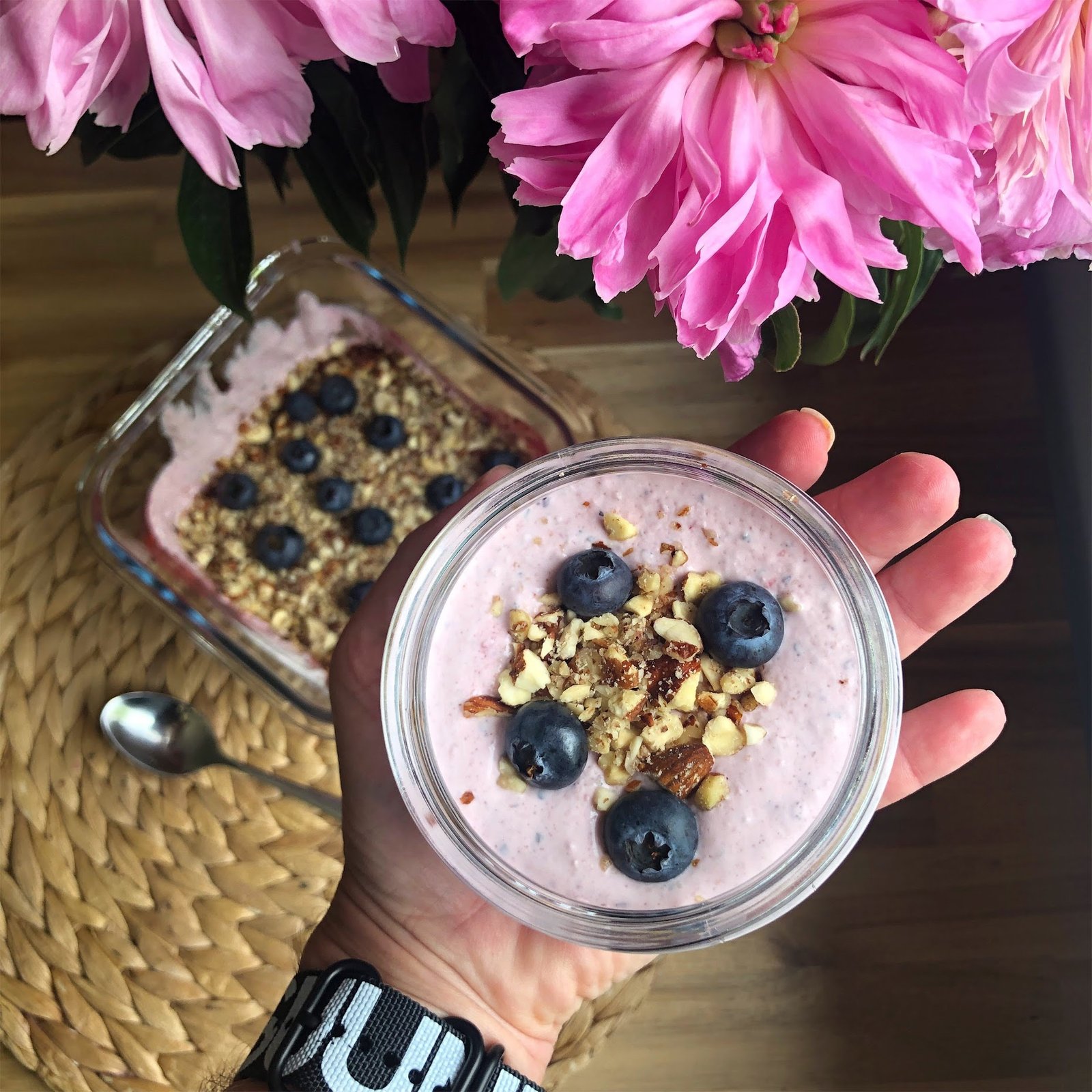
- Half a cup of full-fat Greek yogurt with ten walnuts and a tiny drizzle of honey (yes, a tiny bit of honey is fine)
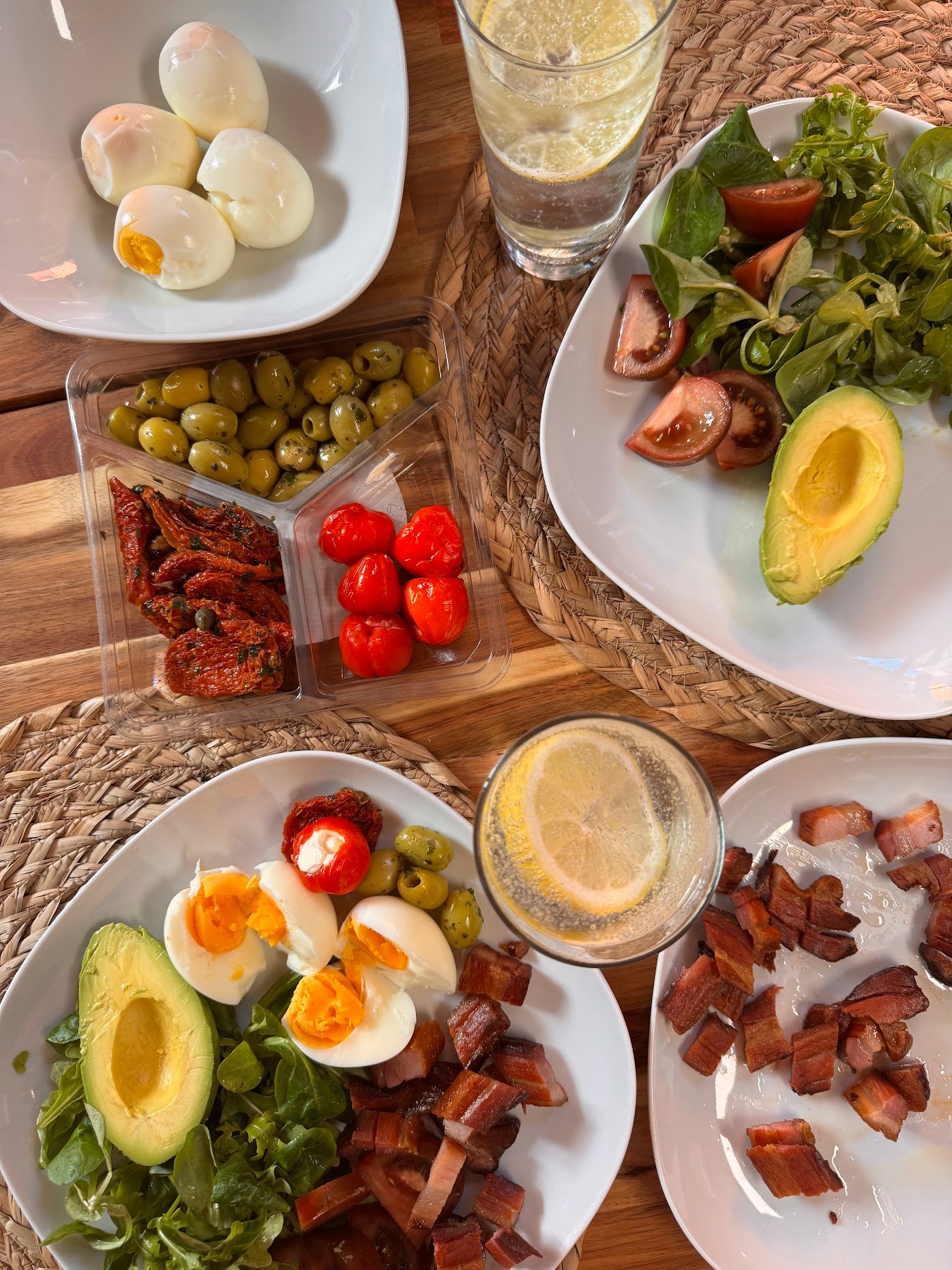
- Two hard-boiled eggs with a handful of cherry tomatoes and olives
- A small bowl of bone broth with fresh herbs stirred in
The formula is always the same: protein plus healthy fat plus something green or fermented. This combination keeps my blood sugar incredibly stable through the night.
The Dinner Formula That Helps Me Sleep
My dinners now follow what I call the “sleep plate” concept: a palm-sized portion of fatty fish or eggs, a huge pile of sautéed leafy greens in olive oil, and maybe some fermented vegetables on the side. Sometimes I’ll add half an avocado or some full-fat feta cheese.
I eat dinner between 6 and 7pm, which gives me time to digest before bed. When I ate too late, even with the right foods, I’d still wake up. Timing matters.
One dinner I make at least twice a week: baked salmon with garlic and herbs, served over wilted spinach that I’ve sautéed with so much olive oil it’s almost like a warm salad. Side of fermented vegetables. Done in 20 minutes, and I sleep like I’m 25 again.
What I Stopped Eating After 3pm (And Why)
This part was harder than adding foods. I had to give up some things I loved, at least in the evening:
- All caffeine after 2pm, including dark chocolate (this was rough)
- MCT oil and “bulletproof” anything after lunch
- Large amounts of aged cheese in the evening
- Any processed keto snacks with artificial sweeteners
- Big portions of meat without enough fat
Each of these was disrupting my sleep in ways I didn’t realize until I tracked it. The dark chocolate one hurt, but I learned that even the caffeine in 85% dark chocolate was enough to keep me wired at night. Now I save it for morning.
The Foods That Were Sabotaging My Sleep (Even Though They’re ‘Keto’)
Can I be completely honest? Some of my worst sleep happened when I was being “perfectly keto” according to online advice. Because not all keto is created equal, especially for perimenopausal women trying to sleep.
The Caffeine Hiding in Your Keto Products
I saw a post on Reddit last month that made me want to scream on behalf of all of us: a woman wrote that she couldn’t figure out why her sleep had gotten worse since starting keto, despite doing “everything right.” When she listed what she was eating, I spotted it immediately—her keto protein bars contained green tea extract and guarana (both stimulants), and she was eating them at 5pm.
So many processed keto products contain hidden stimulants: green tea extract, guarana, yerba mate, even synthetic caffeine. They’re marketed for energy, but nobody mentions they’ll wreck your sleep if you eat them too late.
Why That Evening ‘Fat Coffee’ Isn’t Helping
I used to make myself a “keto coffee” with MCT oil and butter every afternoon around 4pm. It felt like self-care. It felt like I was doing something healthy. But MCT oil, especially C8, gives you a quick energy boost by raising ketones rapidly. That’s great at 8am. It’s terrible at 4pm when you’re trying to wind down for sleep.
The half-life of caffeine in perimenopausal women can be up to 10 hours—longer than when we were younger. That afternoon coffee you handled fine at 35? It’s still in your system at midnight now.
I switched to herbal tea with a tablespoon of regular olive oil stirred in if I wanted that fatty, satisfying feeling. Game changer.
Artificial Sweeteners and Your Sleep Cycle
This one is controversial in keto circles, but I have to share what I experienced. When I cut out all artificial sweeteners after 3pm, my sleep improved noticeably within three days. Recent research suggests some artificial sweeteners can affect insulin response and cortisol patterns, even though they don’t technically contain sugar.
I’m not saying never have them. I’m saying pay attention to timing. That evening “sugar-free” dessert might be affecting you more than you realize.
Your 7-Day Mediterranean Sleep Food Reset
Here’s how to actually implement this without overwhelming yourself. I learned the hard way that changing everything at once never works.
Days 1-3: Add Before You Subtract
Don’t take anything away yet. Just add these perimenopause sleep foods to what you’re already doing:
Day 1: Add fatty fish at dinner. Just once. See how you feel that night.
Day 2: Add a huge portion of sautéed leafy greens cooked in olive oil to your dinner. I mean huge—at least two cups cooked.
Day 3: Have a small handful of walnuts or almonds at 3pm, even if you’re not hungry. Notice your energy levels in the evening.
Don’t change anything else yet. Just notice how you feel.
Days 4-7: The Evening Routine Shift
Day 4: Cut all caffeine after 2pm. This includes chocolate, green tea, and any supplements with stimulants. Replace your afternoon coffee with herbal tea.
Day 5: Move your dinner earlier if possible (between 6-7pm) and make sure it includes protein, fat, and greens.
Day 6: Add the evening yogurt or egg snack if you’re hungry 2 hours before bed. If you’re not hungry, don’t force it.
Day 7: Start your chamomile tea ritual at the same time every evening. Consistency matters more than the tea itself.
What to Expect (The Good and the Annoying)
Let me be real with you: the first three nights might not be magical. Your body needs time to adjust. I didn’t sleep dramatically better until day 5 or 6. But what I did notice immediately was fewer blood sugar crashes and less of that wired-but-tired feeling.
Some women in my community report falling asleep easier within 2-3 days. Others take two full weeks to see major changes. The pattern seems to be: blood sugar stabilizes quickly, but the deeper hormone support takes longer.
You might also notice you’re more aware of how specific foods affect you. That’s good. Pay attention.
Beyond Food: The Mediterranean Sleep Habits That Complete the Picture
I’d love to tell you that food alone fixed everything, but I’d be lying. The perimenopause sleep foods work best when combined with a few lifestyle shifts I learned living here in Spain.
The Spanish Siesta Wisdom (Adapted for Real Life)
I can’t take a two-hour siesta in the middle of the day—I work. But I did adopt a modified version: if I’m exhausted, I lie down for 20 minutes after lunch. Not to sleep necessarily, just to rest with my eyes closed. It sounds indulgent, but it genuinely helps prevent that overtired state that makes falling asleep at night harder.
The principle behind the siesta isn’t laziness. It’s recognizing that rest matters and fighting through exhaustion has consequences for your sleep later.
Evening Walks and Body Temperature
Every evening around sunset, I walk for 20-30 minutes. This isn’t about exercise or burning calories. It’s about light exposure and body temperature regulation. Studies show that a slight drop in core body temperature signals your body that it’s time to produce melatonin.
In Spain, everyone walks in the evening. It’s social, it’s relaxing, and it turns out it’s incredibly beneficial for sleep. The light exposure helps reset your circadian rhythm too, which gets disrupted during perimenopause.
The Social Dinner Effect on Stress Hormones
One thing I’ve noticed living here: meals are social and slow. Even when I eat alone now, I sit down at a table, put my phone away, and eat slowly. This reduces cortisol significantly compared to eating while stressed or standing at the counter.
High cortisol at dinner time translates to high cortisol at bedtime. The ritual of a peaceful evening meal, focusing on those perimenopause sleep foods, became as important as the food itself.
My friend Elena, who’s 49 and recently moved to Madrid, told me she thought this was silly until she tried it. She noticed the difference within days—eating the same foods in a rushed, stressed way didn’t help her sleep. Eating them slowly, peacefully? Completely different result.
What Success Actually Looks Like
I want to set realistic expectations because I spent too long thinking I was failing when I was actually succeeding.
Success doesn’t mean sleeping perfectly every single night. It means sleeping well most nights. It means when you do wake up at 3am, you can fall back asleep within 20 minutes instead of lying there for hours. It means waking up feeling rested more often than not.
For me, success meant going from waking up 5-7 times per night to maybe once or twice. It meant my sleep tracking app showing deep sleep again after months of nothing but light, fragmented sleep.
A woman in my Facebook group shared last week that she’d been implementing these food changes for three weeks and finally, for the first time in a year, she slept through an entire night. She cried when she woke up. I completely understood.
The Questions You’re Probably Asking
What’s the best perimenopause sleep food to eat right before bed? Greek yogurt with a small handful of walnuts or a few sardines with olive oil—both provide protein, healthy fats, and sleep-supporting nutrients without spiking blood sugar. But eat them 1-2 hours before bed, not right before lying down. You need time to digest.
How long does it take for perimenopause sleep foods to work? Most women notice some improvement within 3-5 days of consistent changes, but full benefits typically show up after 2-3 weeks. Blood sugar stabilization happens quickly, but the deeper hormone support takes longer. Don’t give up if night three isn’t perfect.
Can I still drink coffee during perimenopause if I have sleep problems? Yes, but timing matters more than ever now. Stop all caffeine by 2pm, earlier if you’re particularly sensitive. Your body metabolizes caffeine more slowly during perimenopause, so that afternoon coffee affects you far more than it used to. I learned this by wearing a continuous glucose monitor and seeing the cortisol spike hours later.
Are there any perimenopause sleep foods I should avoid on keto? Avoid processed keto products with stimulants, MCT oil after 3pm, and large amounts of aged cheese in the evening (it contains tyramine, which can be stimulating). Stick to whole Mediterranean foods: fatty fish, olive oil, leafy greens, nuts, and full-fat dairy. Real food, not products.
What I Wish Someone Had Told Me Two Years Ago
I wish someone had told me that fixing my sleep wasn’t about willpower or trying harder. It was about working with my changing body instead of against it. I wish I’d known that the solution was in simple, real Mediterranean foods I could find at any market.
I wasted so much money on supplements and gadgets and programs that promised perfect sleep. What actually worked was sardines and spinach and olive oil. Foods my grandmother would recognize. Foods that humans have been eating for thousands of years.
The night sweats haven’t completely disappeared. I still have rough nights occasionally. But most nights now? I sleep. Real, restorative sleep. And on the nights I don’t, I know it’ll pass, and I have tools that actually work.
You’re not broken. Your body isn’t betraying you. It’s changing, and it needs different support now. These perimenopause sleep foods aren’t a quick fix or a magic cure. They’re a way of eating that supports your hormones, stabilizes your blood sugar, and gives your body what it needs to produce the sleep hormones that make rest possible.
Start with one food. Just one. Add fatty fish to your dinner tonight, or have a handful of walnuts at 3pm tomorrow. Notice how you feel. Then add another. Small changes compound into transformative results, but only if you actually do them.
And please, be patient with yourself. It took your body years to reach this point. It might take a few weeks to find your new rhythm. But you will find it. I did, and so have thousands of women in this community. You’re not alone in this, even though I know it feels that way at 3am.
The exhaustion you’re feeling is real, but it doesn’t have to be permanent. Your sleep can improve. Mine did, and I never thought I’d say that again.