I was standing in my kitchen at 42, staring at a sad piece of grilled chicken breast on my plate, when I realized something was wrong. I’d been eating the same amount of protein I’d always eaten—the amount that helped me lose all that weight when I first started keto—but my body was rebelling. The scale was creeping up, my energy was tanking by 2pm, and I was losing muscle I could actually see disappearing from my arms. That’s when I started understanding the connection between protein perimenopause changes—and how everything I thought I knew about protein needs was about to shift.
If you’re in your 40s and feeling like your body suddenly speaks a different language, you’re not imagining it. And you’re definitely not alone.
The Day I Realized My Protein Needs Had Changed
Here’s what nobody tells you about perimenopause: your protein requirements don’t just change a little—they can increase by 30-50% compared to your younger years. I learned this the hard way, watching my body composition shift despite doing “everything right.”
A woman named Sofia reached out to me last month, frustrated and confused. She’s 48, works as a nurse in Valencia, and she told me she was eating the same keto meals that had worked perfectly for three years. “Susana,” she wrote, “I feel like I’m disappearing. Not in a good weight-loss way—I mean my muscles are getting smaller, but my belly is getting bigger. What is happening to me?”
I knew exactly what she meant. That feeling of your body betraying you, of strategies that worked beautifully suddenly failing. It’s one of the most isolating parts of protein perimenopause challenges—you think you’re doing something wrong when really, your body is asking for something different.
Why Perimenopause Changes Everything About Protein
When estrogen starts its chaotic decline during perimenopause, it takes your muscle-building efficiency with it. Research from the University of Illinois found that women in perimenopause need significantly more protein to maintain the same muscle mass they had just a few years earlier. We’re not just fighting aging—we’re fighting a hormonal shift that makes our bodies less efficient at using the protein we eat.
Think of it like this: if your younger body could build a house with 100 bricks, your perimenopausal body might need 140 bricks to build the same house. The construction process has gotten less efficient.
I see this in my community constantly. Women who were thriving on moderate protein suddenly find themselves tired, losing muscle tone, and gaining that stubborn middle-weight despite eating clean keto. The frustration is real, and it’s everywhere.
What Actually Happens to Protein During Perimenopause
Your body becomes resistant to protein’s muscle-building signals—scientists call this “anabolic resistance.” A 2023 study in the Journal of Nutrition found that perimenopausal women needed about 40 grams of protein per meal to trigger the same muscle protein synthesis that 25 grams would have triggered in their 30s.
Meanwhile, your metabolism is slowing down, but not in the way you think. You’re actually losing metabolically active muscle tissue, which means each pound of muscle loss makes it harder to maintain your weight. It’s a cascade that feeds itself—unless you interrupt it with adequate protein.
How Much Protein Do We Actually Need?
This is where I’m going to tell you something that might surprise you: the old keto recommendation of 20-25% of calories from protein isn’t enough for most women navigating perimenopause. Not even close.
After working with hundreds of women in their 40s and 50s, and living through this myself, I’ve found that most of us need closer to 1.6-2.0 grams of protein per kilogram of body weight. For me at 60kg now, that’s 96-120 grams per day. When I was heavier and losing weight, I aimed even higher.
I remember the week I increased my protein from about 80 grams to 110 grams daily. Within ten days, the difference was remarkable. My 2pm energy crash disappeared. My clothes fit better—not looser necessarily, but better, like my body had more structure. And for the first time in months, I could see definition in my arms again when I lifted my shopping bags.
The Mediterranean Approach to Protein Perimenopause
Here’s where living in Spain saved me. I wasn’t reaching for protein powders or processed bars. I was eating real food that Mediterranean cultures have relied on for centuries—foods that happen to be perfect for supporting women through hormonal changes.
My friend Elena, who’s 51 and went through this transition two years before me, taught me to think about protein at every meal, not just dinner. She’d start her day with a tortilla española loaded with vegetables, have sardines with a massive salad for lunch, and enjoy grilled fish or lamb with roasted vegetables for dinner.
“The secret,” she told me over coffee one morning, “is making protein the star, not the side character.”
My Daily Protein Strategy Now
I eat roughly 30-40 grams of protein at each main meal. This isn’t complicated or expensive—it’s just intentional. A 2022 study from the American Journal of Clinical Nutrition confirmed that distributing protein evenly across meals is more effective for muscle maintenance in midlife women than eating most of it at dinner.
My typical day looks like this:
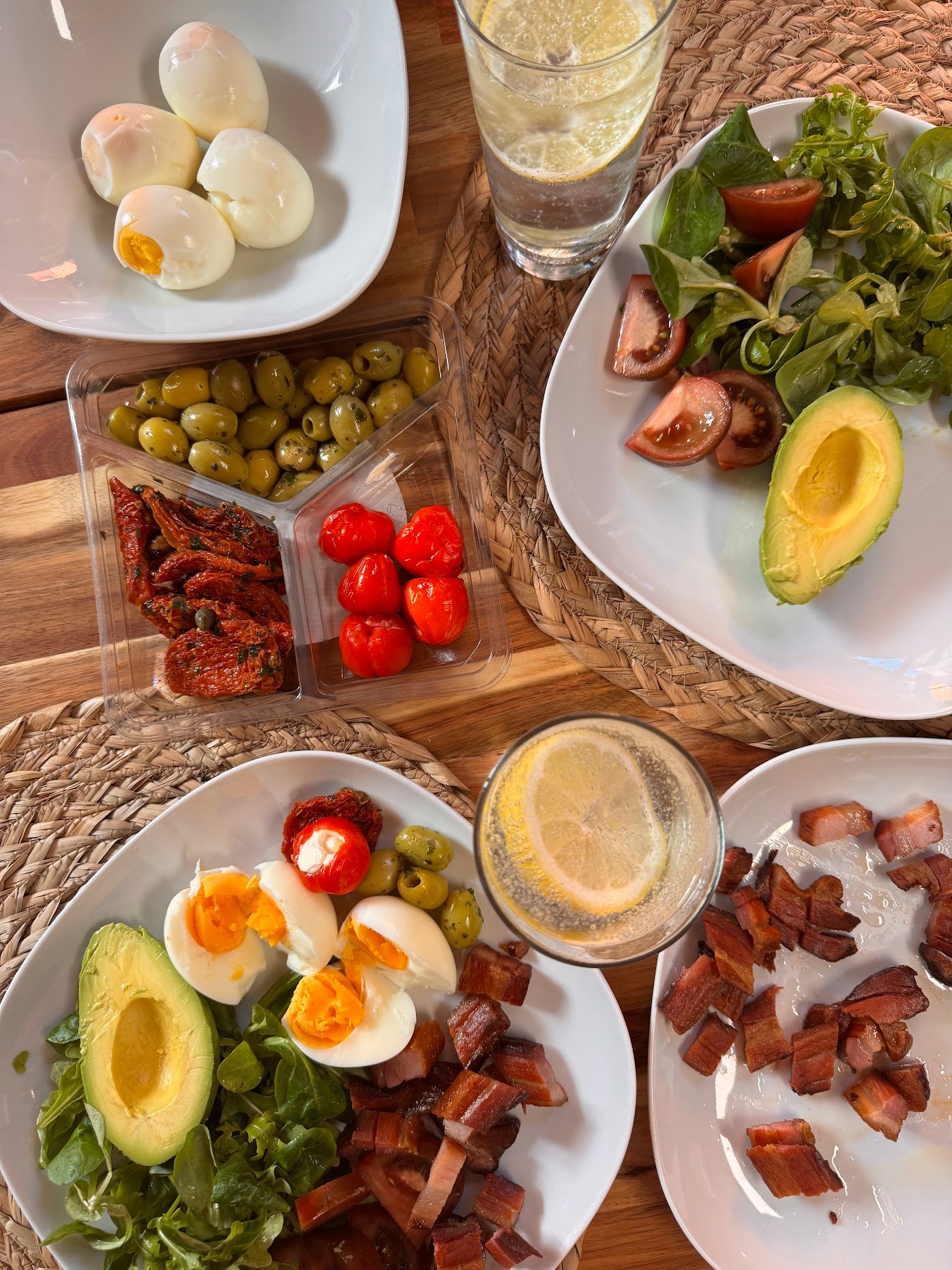
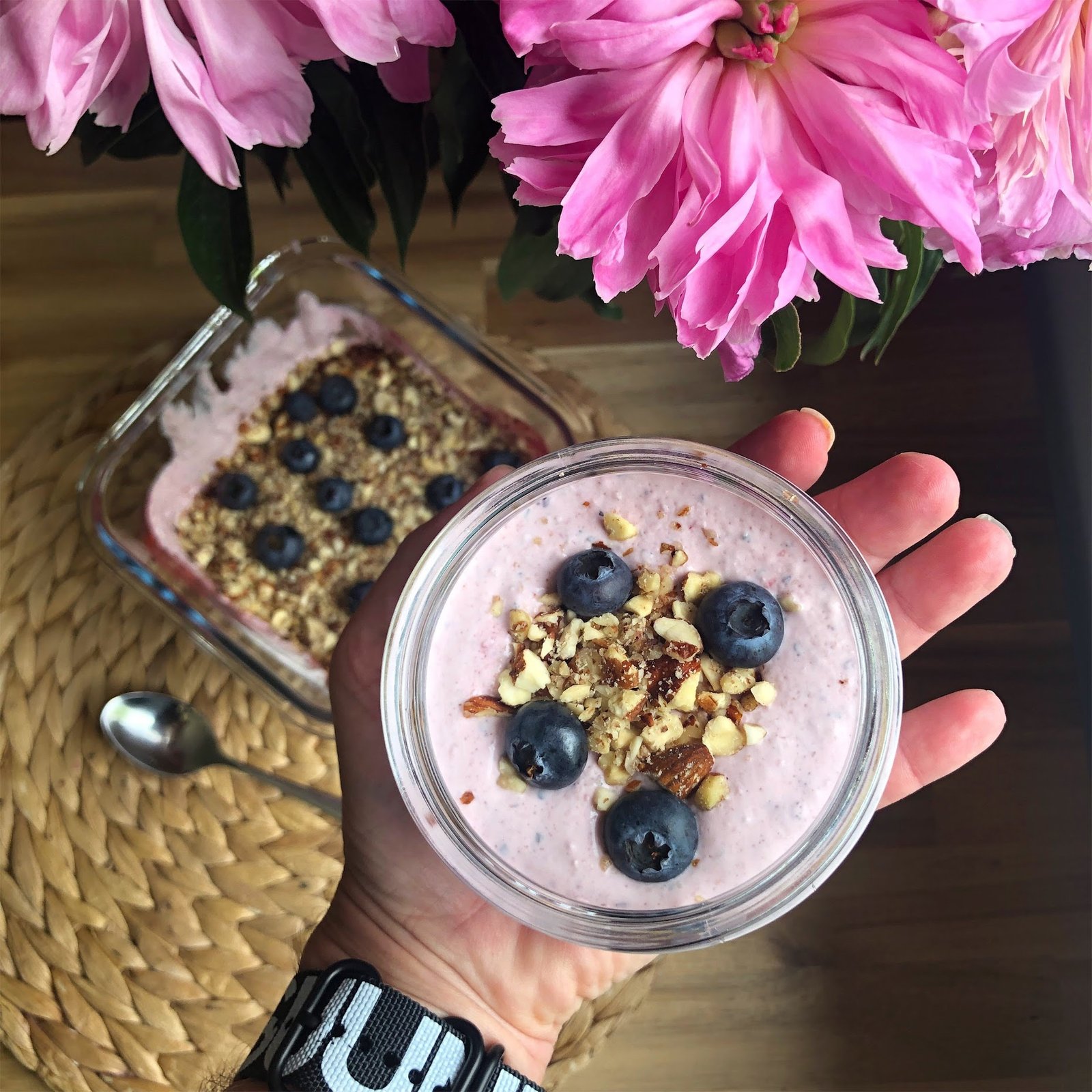
Breakfast (35g protein): Three eggs cooked in olive oil with spinach and tomatoes, topped with crumbled feta cheese. Sometimes I’ll have Greek yogurt with a handful of almonds instead.
Lunch (40g protein): A massive salad with either canned sardines, grilled chicken thighs, or leftover lamb. I always add olive oil, olives, and usually some aged Manchego cheese. The fattier proteins help me stay satisfied.
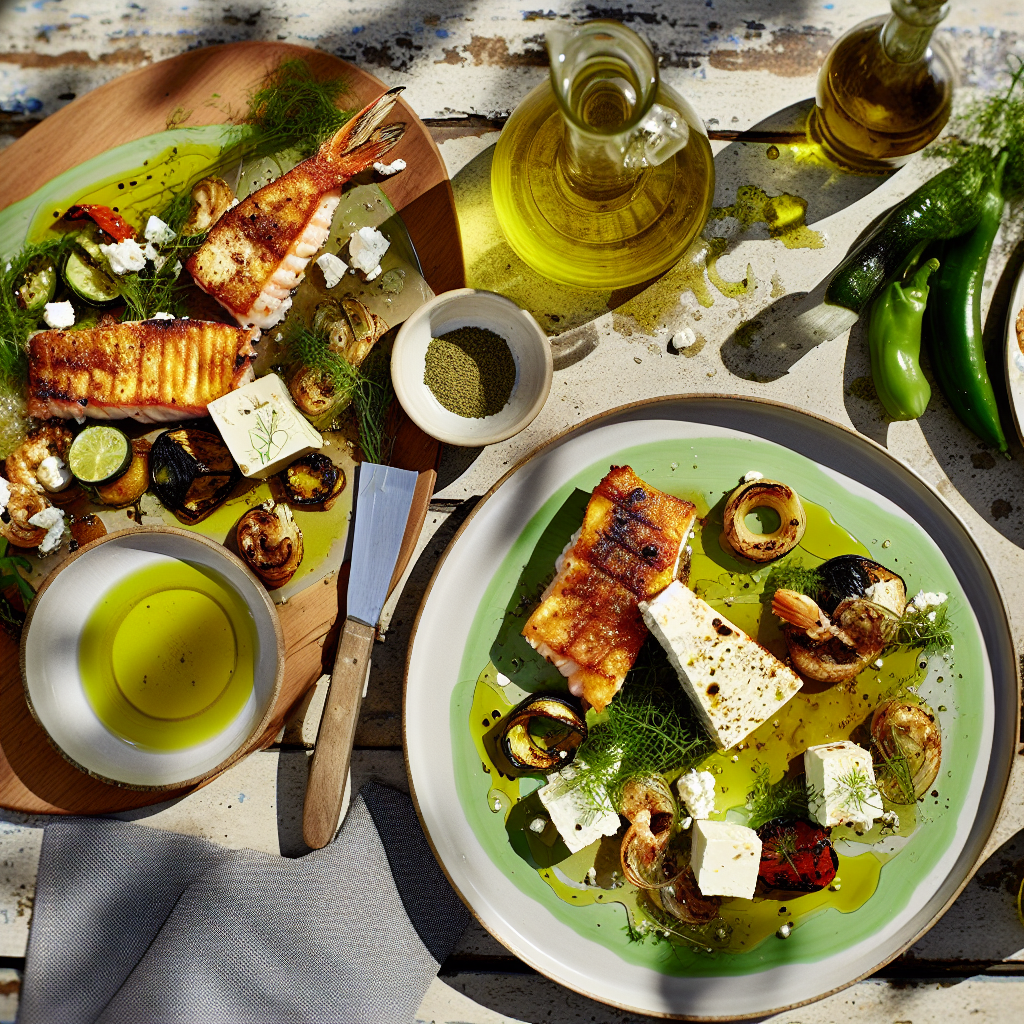
Dinner (35g protein): Grilled fish—sea bass, salmon, or whatever looked good at the market—with roasted vegetables drizzled in olive oil. Or sometimes a slow-cooked meat dish with lots of herbs.
Notice what’s missing? Protein shakes. Bars. Powders. Just real food that I can buy at any market.
The Foods That Changed Everything
When I talk about increasing protein during perimenopause, women often panic, thinking it means eating boring, dry chicken breast three times a day. That’s not remotely what I’m suggesting, and it’s definitely not the Mediterranean way.
Fatty Fish
Sardines, mackerel, salmon, anchovies—these are my absolute foundation. A can of sardines has about 23 grams of protein and costs less than 2 euros. Salmon provides about 25 grams per 100-gram serving, plus omega-3 fats that help with inflammation and mood.
I keep canned sardines and mackerel in my pantry always. When Anna, who’s in my online community, said she couldn’t afford expensive protein sources, I sent her my sardine salad recipe. She messaged me three weeks later: “I’ve lost 3kg, I have more energy, and my grocery bill went DOWN.”
Eggs
Three large eggs give you about 18-20 grams of protein. They’re cheap, versatile, and combined with olive oil, they’re incredibly satisfying. I go through at least two dozen eggs a week.
Greek Yogurt and Cheese
Full-fat Greek yogurt provides about 10 grams of protein per 100 grams. Aged cheeses like Manchego, Parmesan, or Pecorino are even higher. I’m not talking about low-fat diet products—I mean real, traditional cheeses that have been sustaining Mediterranean people for centuries.
Meat and Poultry
I prioritize fattier cuts—chicken thighs over breasts, lamb shoulder, pork belly. These provide plenty of protein while keeping meals satisfying and delicious. A chicken thigh has about 13 grams of protein, and it actually tastes good.
Legumes (Yes, Really)
I know strict keto avoids legumes, but in Mediterranean keto, I include small amounts of lentils and white beans occasionally. A small serving of lentils adds protein and fiber, and the carb count fits if you’re mindful. This isn’t necessary, but it’s how people here actually eat.
What Happened When I Got This Right
About six weeks after I increased my protein intake strategically, several things shifted. My weight stabilized first—no more mysterious two-kilo fluctuations that made no sense. Then my energy evened out. That afternoon crash that had me fantasizing about naps? Gone.
But the most noticeable change was my body composition. I wasn’t losing dramatic amounts of weight on the scale, but my clothes fit completely differently. My husband noticed muscles in my shoulders I hadn’t seen in years. I felt solid again, not soft and formless.
My sleep improved too, which I didn’t expect. Research from the University of Washington found that higher protein intake correlates with better sleep quality in perimenopausal women, possibly because it helps stabilize blood sugar throughout the night.
The Mistakes I See Over and Over
In the Facebook group and in messages I get almost daily, I see women making the same mistakes I made initially.
Mistake one: Eating the same protein amount they ate at 35. Your needs have changed. What worked then won’t work now.
Mistake two: Saving all their protein for dinner. That 50-gram steak at night doesn’t compensate for a protein-poor breakfast and lunch. Your muscles need consistent protein signals throughout the day.
Mistake three: Choosing lean proteins to “save calories.” During perimenopause, fat isn’t your enemy—inadequate protein is. That dry chicken breast won’t keep you satisfied, and you’ll end up snacking later.
Mistake four: Relying on protein bars and shakes instead of real food. These processed products often cause cravings and blood sugar swings that real food doesn’t.
Someone posted in a perimenopause forum last week: “I’m eating keto, tracking everything, but I’m gaining weight and losing muscle. What’s wrong with me?” When she shared her food diary, she was eating only 60 grams of protein daily at 70kg body weight. Nothing was wrong with her—she just needed more of the right fuel.
When the Scale Doesn’t Move (But Everything Else Does)
Here’s something I wish someone had told me earlier: when you increase protein during perimenopause, especially if you start any strength training, the scale might not budge much. Or it might even go up slightly at first.
This freaked me out initially. I’d increased my calories through protein, and the number on the scale didn’t reward me with immediate drops. But my measurements told a different story. My waist got smaller. My arms got more defined. My energy soared.
Marta, who’s 52 and a teacher in Barcelona, experienced the same thing. She increased her protein from 70 to 120 grams daily, and for three weeks, her scale weight stayed exactly the same. Then suddenly, in week four, she dropped 2.5 kilos seemingly overnight. Her body needed time to adjust and build metabolically active tissue before it would release fat.
“I almost gave up in week two,” she told me. “But my jeans were fitting better, so I trusted the process. I’m so glad I did.”
Practical Changes You Can Make Today
You don’t have to overhaul your entire life to make protein perimenopause needs work for you. Start with one meal and build from there.
Tomorrow morning, instead of your usual coffee and maybe some toast, try three eggs with vegetables cooked in olive oil. Notice how you feel at 11am compared to usual.
Add a can of sardines or mackerel to your lunch salad this week. Track your afternoon energy.
Keep a pack of hard-boiled eggs in your fridge. When you’re hungry between meals, eat one or two instead of reaching for nuts or cheese alone.
These small shifts add up faster than you’d think. You don’t need perfection—you need consistency and enough protein to support your changing body.
The Reality of Doing This Long-Term
I’m not going to lie and say it’s always easy. Some days, I don’t hit my protein goals. Some days, I eat too much cheese and not enough actual protein-rich foods. Life happens. I travel, I get busy, I occasionally just want a big bowl of olives for dinner.
But most days, I prioritize protein because I know what happens when I don’t. The fatigue creeps back. My clothes fit differently within a week. My mood dips. My body gives me clear feedback, and I’ve learned to listen.
The beautiful thing about the Mediterranean approach to protein perimenopause nutrition is that it’s inherently sustainable. I’m not choking down tasteless protein shakes or eating the same boring meals. I’m eating foods that people in this region have enjoyed for generations—foods that happen to perfectly support women through hormonal transitions.
Last week, I had lunch with a group of women from my community, ages 44 to 56. Every single one of them had a protein-rich meal. We had grilled fish, seafood salads, lamb chops, octopus. We laughed, drank wine (in moderation), and enjoyed our food. Nobody felt deprived or like they were “on a diet.”
That’s what this should feel like. Not punishment, not restriction, but nourishment that works with your body’s current needs.
You’re Not Broken
If you’re struggling with weight gain, energy crashes, and body composition changes in your 40s, please hear this: you’re not doing anything wrong. Your body’s protein needs have legitimately changed, and nobody bothered to tell you.
The strategies that worked beautifully in your 30s—moderate protein, calorie restriction, lots of cardio—those don’t work the same way now. Not because you lack willpower or discipline, but because perimenopause fundamentally changes how your body processes and uses protein.
When you align your eating with your body’s current needs—more protein, distributed throughout the day, from real and satisfying foods—everything starts working again. Not instantly, and not perfectly, but steadily and sustainably.
You deserve to feel strong and energized in your 40s and beyond. You deserve to eat food you actually enjoy. And you absolutely deserve to understand what your body needs during this transition, because perimenopause is hard enough without fighting against yourself.
If you take one thing from my experience and the experiences of the hundreds of women I’ve worked with, let it be this: increase your protein, make it delicious and real, and give your body time to respond. The changes might be subtle at first, but they compound into something significant.
You’re not alone in this. We’re all figuring it out together, one plate of sardines and one perfectly cooked egg at a time.