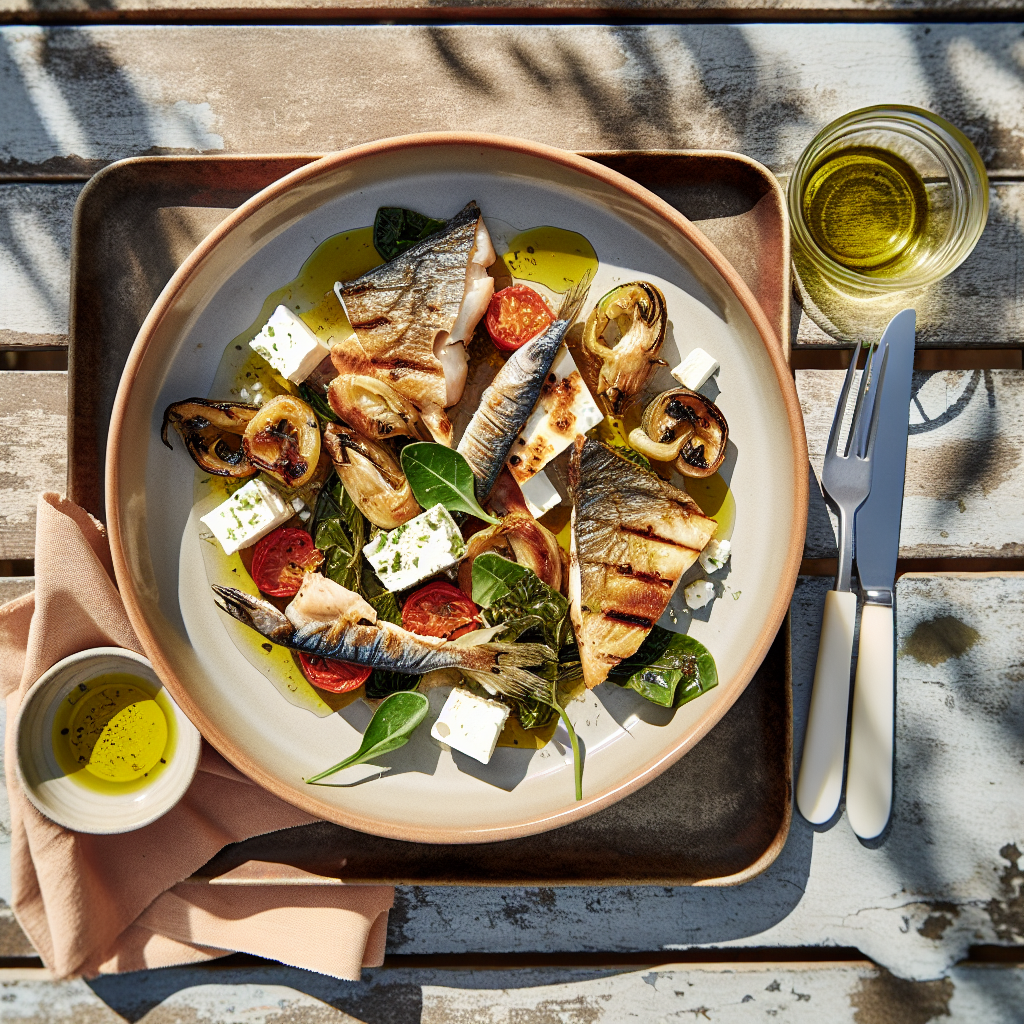
I was standing in my kitchen last Tuesday, staring at my lunch—a beautiful Greek salad with feta and olives—when it hit me: where was my protein? I’d been feeling exhausted for weeks, my muscles felt weaker despite walking every day, and my clothes were somehow tighter even though the scale hadn’t moved much. At 46, I was learning the hard way that the protein women over 40 need isn’t just about hitting some arbitrary number. It’s about survival in perimenopause.
A woman named Sofia messaged me that same week. She’s 51, works in IT in Valencia, and wrote: “Susana, I’m eating keto, I’ve cut my carbs, I’m doing everything right. But I feel like I’m disappearing. My arms look thinner but flabbier. What am I doing wrong?”
I knew exactly what she meant because I’d been there.
The Day I Realized Everything Had Changed
About two years ago, I was maintaining my 40kg weight loss beautifully. I’d been eating the same way for five years—plenty of olive oil, lots of vegetables, some fish and meat, cheese when I wanted it. It worked perfectly.
Then perimenopause hit like a freight train I didn’t see coming.
Suddenly, my body wasn’t playing by the old rules anymore. I’d wake up at 3am drenched in sweat, exhausted but unable to fall back asleep. My afternoon energy crashes became so severe I’d find myself staring at my computer screen, unable to form coherent thoughts. And the muscle loss—that was the scary part.
My friend Marta, who’s a personal trainer in Barcelona, took one look at me during our coffee date and said: “Susana, when was the last time you actually tracked your protein?” I laughed it off. I’d lost 40kg without obsessing over macros. Why would I need to start now?
But she was right. And it turns out, the protein women over 40 need is radically different from what we needed in our thirties.
What Actually Happens to Our Protein Needs
I started digging into the research, and what I found explained so much. A 2023 study from the University of Illinois found that women in perimenopause and menopause need up to 50% more protein than younger women to maintain the same muscle mass.
Fifty percent more. Let that sink in.
Here’s what happens: as estrogen declines, we lose the protective effect it had on our muscles. Estrogen helps muscles repair and rebuild after normal daily activity. Without adequate estrogen, we need more of the raw building blocks—amino acids from protein—to do the same job.
Dr. Gabrielle Lyon, who focuses on muscle health in aging women, explains it this way: our bodies become less efficient at processing protein. We need more to trigger the same muscle protein synthesis we used to get from smaller amounts.
I sat down and actually calculated what I’d been eating. On a good day, I was getting maybe 60-70 grams of protein. For my body weight and activity level at 46, I needed closer to 100-120 grams.
No wonder I felt like I was falling apart.
What Changed When I Finally Got Serious
I didn’t overhaul everything overnight. That’s not sustainable, and I’m all about the long game. But I made some strategic shifts that completely transformed how I felt.
First, I started every single day with protein. Not a coffee and a piece of fruit. Not just olive oil in my coffee (yes, I used to do that). Actual protein.
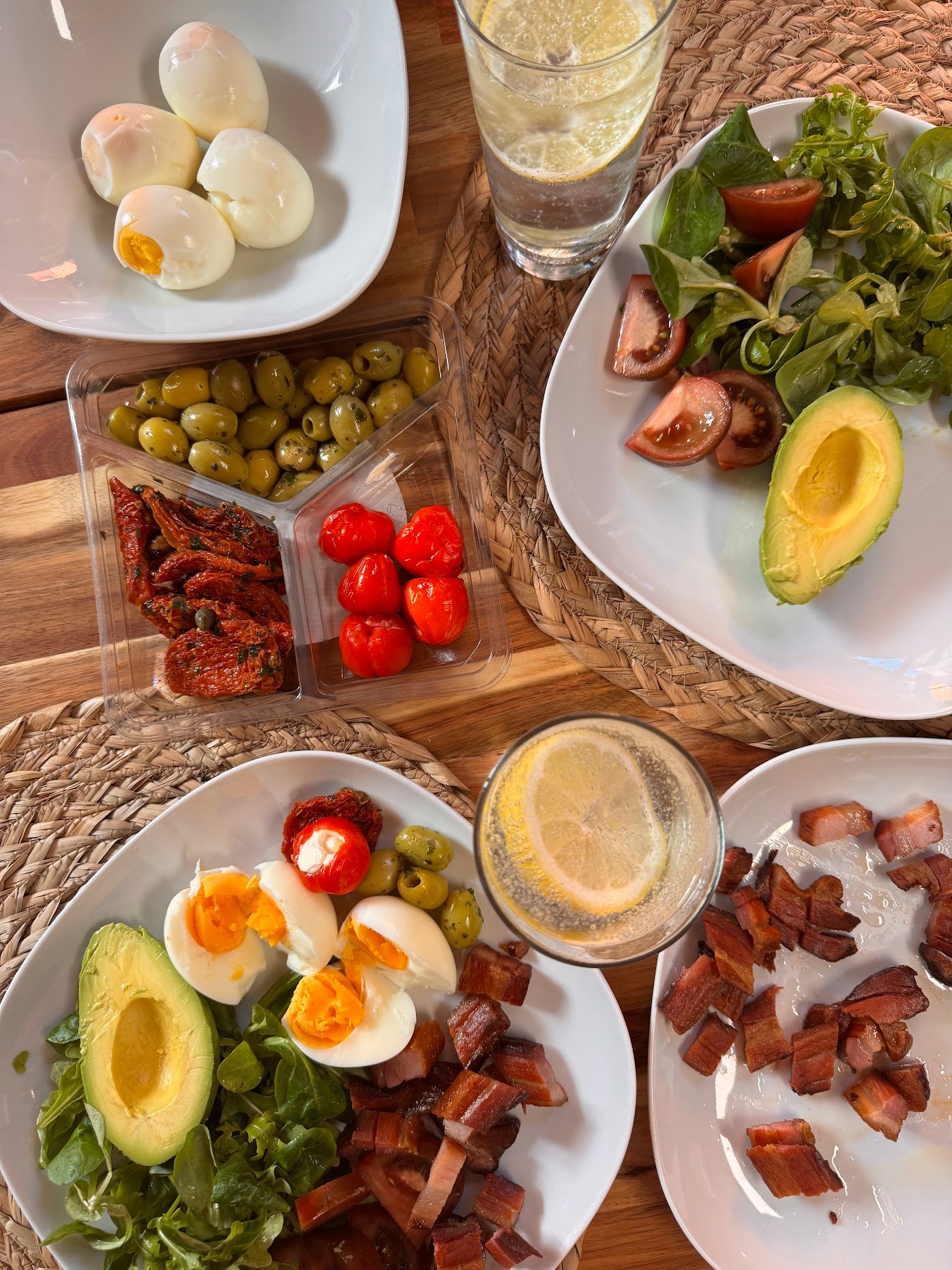
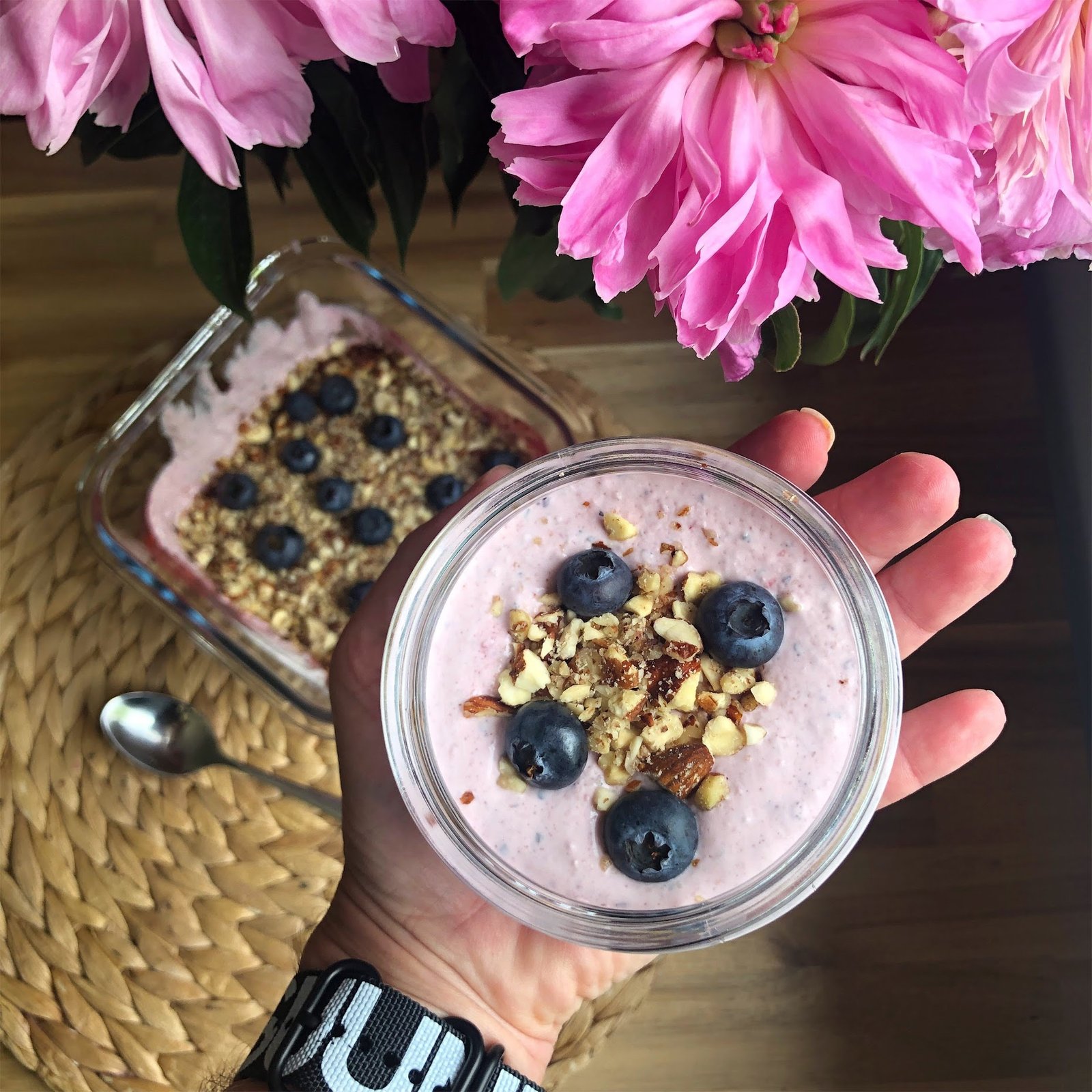
My typical breakfast now: three eggs scrambled in olive oil with spinach and feta, sometimes with a few slices of Serrano ham on the side. Or Greek yogurt—the real, full-fat kind from the local market—with a handful of walnuts and a drizzle of honey.
The difference in my energy by 11am was shocking. No mid-morning crash. No desperate need for another coffee just to function.
Anna, who’s in my online community and just turned 49, told me she tried the same thing. “I thought I’d feel too full,” she said. “But instead, I stopped obsessing about food by 10am. And I didn’t need that pastry I used to grab with my second coffee.”
The Mediterranean Protein Sources I Actually Use
I’m not about to start drinking protein shakes or eating bars made in a factory. That’s not how we eat here, and it’s not what your body actually wants. The Mediterranean has been feeding people high-quality protein for thousands of years.
Here’s what I rotate through every week:
Fish and seafood: Sardines, mackerel, salmon, prawns, octopus. I aim for fatty fish at least three times a week. A serving of grilled sardines gives you about 25 grams of protein plus those omega-3s that help with inflammation and joint pain—another perimenopause gift.
Eggs: I go through about 18-24 eggs a week now. They’re cheap, versatile, and each one gives you 6-7 grams of complete protein. Plus the yolks have choline, which helps with the brain fog.
Greek yogurt: The real stuff, not the flavored nonsense. A cup has about 15-20 grams of protein. I eat it savory too—with olive oil, za’atar, and cucumber. It’s amazing.
Cheese: Feta, manchego, aged pecorino. Not huge amounts because I’m still keeping carbs moderate, but quality cheese is both protein-rich and satisfying.
Lamb and chicken: I eat less red meat than I used to, but when I do, I choose quality. A grilled chicken breast or lamb chops with herbs is simple and protein-dense.
Legumes in moderation: Yes, I said it. Small amounts of lentils or white beans in a soup don’t kick me out of ketosis, and they add protein plus fiber. A Mediterranean approach isn’t about total elimination—it’s about balance.
The Timing Thing Nobody Tells You
Here’s something I learned that changed everything: it’s not just about total protein. It’s about spreading it out.
I saw a post in a perimenopause forum that made me laugh and cry at the same time. A woman wrote: “I’m eating a huge dinner with tons of meat because I’m barely hungry all day. Why am I still losing muscle?”
Because our bodies can only process about 25-35 grams of protein at once for muscle building. The rest just gets converted to glucose or used for energy. When you’re trying to preserve muscle in perimenopause, that’s not efficient.
Research from 2024 published in the Journal of Nutrition showed that women over 40 who distributed their protein evenly across three meals maintained significantly more muscle mass than women who ate the same total amount concentrated in one or two meals.
So now I aim for about 30-35 grams at breakfast, 30-35 at lunch, and 30-40 at dinner. Some days I add a snack—maybe some cheese and olives, or leftover chicken.
My client Eva—she’s 54 and going through full menopause—was skeptical about this. “I’m just not hungry in the morning,” she told me. I get it. Neither was I.
But after two weeks of forcing herself to eat protein at breakfast, her appetite actually normalized. Her energy stabilized. And she stopped waking up ravenous at midnight, standing in front of the fridge eating whatever she could find.
What This Looks Like in Real Life
I’m not weighing and measuring everything. That’s not sustainable for me, and it makes food stressful instead of enjoyable. But I do use my hand as a rough guide now.
At each meal, I aim for a palm-sized portion of protein. That’s roughly 25-35 grams depending on the source. Then I add lots of vegetables cooked in olive oil, maybe a small portion of berries or a piece of fruit, and that’s it.
Yesterday’s meals looked like this:
Breakfast: Omelet with three eggs, feta, tomatoes, and fresh herbs. Cooked in olive oil. About 30 grams of protein.
Lunch: Grilled chicken thigh over mixed greens with cucumber, olives, red onion, and a lemon-olive oil dressing. A small piece of crusty bread for my husband, none for me. About 35 grams of protein.
Dinner: Pan-seared salmon with roasted asparagus and zucchini. A few spoonfuls of white beans with garlic and rosemary on the side. About 40 grams of protein.
Total: around 105 grams. I felt energized, satisfied, and I slept well.
The Muscle Mass Wake-Up Call
Someone in my Facebook group asked last month: “Why does muscle mass even matter? I just want to lose the belly fat.”
I understand the frustration. When you’re dealing with perimenopause weight gain, especially around the middle, you just want it gone. But here’s the truth that took me years to accept: muscle mass is your metabolic currency in perimenopause.
The more muscle you maintain, the more calories you burn at rest. The better your blood sugar regulation. The stronger your bones. The easier your movement. The more independence you have as you age.
A study of 800 women followed through menopause found that those who maintained higher muscle mass had fewer metabolic problems, less severe hot flashes, and better mood stability.
This isn’t about looking like a bodybuilder. This is about being strong enough to carry your groceries, play with your grandkids, travel, live fully. It’s about not becoming frail.
When I increased the protein women over 40 need to actually maintain muscle, I noticed changes within a month. My arms looked more defined, not flabby. My legs felt stronger on my walks. And my metabolism, which had felt like it was crawling, started working again.
The Mistakes I Made (So You Don’t Have To)
I didn’t get this right immediately. I made plenty of mistakes along the way.
Mistake one: I tried to just add protein on top of everything else I was eating. I felt stuffed and uncomfortable. Instead, I needed to adjust portions—less olive oil in some dishes, smaller portions of cheese, fewer nuts—to make room for more protein without feeling miserable.
Mistake two: I bought into the idea that plant protein was just as good. For some people, maybe. But for me at 46, trying to get enough protein from nuts, seeds, and small amounts of legumes left me perpetually under-proteined. I needed dense, bioavailable animal protein sources.
Mistake three: I didn’t adjust when I exercised. On days when I do resistance training or longer walks, I actually need more like 120-130 grams. Took me months to figure out why I felt so depleted after workouts.
Mistake four: I worried too much about the scale going up when I first increased protein. Yes, I gained about 2 kilos initially. But my clothes fit better, my body looked leaner, and my energy was incredible. That “weight” was muscle. Now, six months later, I’m the same weight as before but I look and feel completely different.
What About Kidney Health?
My friend Rosa, who’s a nurse, immediately said: “But isn’t that much protein bad for your kidneys?”
This myth drives me crazy because it keeps women from getting adequate nutrition. Unless you have existing kidney disease, higher protein intake is not only safe but beneficial for women our age.
A comprehensive review from 2023 looked at protein intake in healthy adults and found no evidence of kidney damage from high protein diets—even up to 2 grams per kilogram of body weight daily. For me at 67kg, that would be 134 grams. I’m not even close to that.
What does stress kidneys? High blood sugar, chronic inflammation, dehydration. You know what helps with all of those? Adequate protein, stable blood sugar from lower carbs, and anti-inflammatory foods like fatty fish and olive oil.
When You Just Can’t Eat More
I hear this all the time: “Susana, I’m trying, but I just can’t eat that much. I feel too full.”
A few things that helped me and other women in my community:
Start with bone broth: I make it in big batches and sip it throughout the day. It’s hydrating, has some protein (8-10 grams per cup), and doesn’t feel heavy. Plus it’s amazing for joints and skin.
Choose fattier cuts: Chicken thighs instead of breasts. Salmon instead of white fish. They’re more satisfying per ounce, so you naturally want to eat more.
Make protein the star: I used to make huge salads with a tiny bit of chicken on top. Now I grill the chicken or fish as the main event, and the salad is the side. It’s a mental shift that makes a physical difference.
Eat protein first at every meal: Before the vegetables, before anything else. When you’re full, you’re full, but at least you got the protein in.
The Energy Shift That Surprised Me Most
About six weeks after I adjusted my protein intake, something unexpected happened. The afternoon crashes that had become my new normal—that 3pm wall where I’d need to lie down or pump myself full of coffee—they just stopped.
I mentioned this to Marta, my trainer friend, and she nodded knowingly. “Stable blood sugar,” she said. “Protein doesn’t spike insulin like carbs do. You’re not on the roller coaster anymore.”
She was right. When I tracked my energy throughout the day, it was steady. Not manic highs and desperate lows. Just consistent, calm energy that lasted from morning until evening.
My sleep improved too. I still get hot flashes sometimes—perimenopause isn’t magic—but I fall back asleep easier. I wake up feeling more rested. Research suggests that adequate protein helps regulate cortisol, which affects sleep quality. I don’t know all the mechanisms, but I know what I feel.
This Is Not About Perfection
Some days I still don’t hit my protein goal. Last week I traveled to see family, and my eating was all over the place. I had bread with dinner. I ate the cake at my niece’s birthday. I probably got 60 grams of protein one day.
And you know what? It’s fine. This is about the pattern, not perfection.
What matters is that most days—five or six days a week—I’m giving my body what it needs. The protein women over 40 require isn’t a punishment or a rigid rule. It’s information. It’s understanding that our bodies have changed, and we need to change with them.
The women in my community who do best are the ones who approach this with curiosity instead of judgment. “Oh, interesting, I only got 50 grams today and I felt exhausted. Let me try for more tomorrow.” Not “I failed, I’m terrible, why can’t I do this?”
We’ve spent enough of our lives beating ourselves up over food. This is different. This is taking care of ourselves with the wisdom of experience.
Where You Can Start Today
If you’re reading this and feeling overwhelmed, please don’t be. You don’t have to change everything at once. I certainly didn’t.
Start with tomorrow’s breakfast. Make it protein-focused. See how you feel by lunchtime.
Add one palm-sized serving of protein to lunch and dinner if you’re not already doing that.
Notice your energy, your hunger, your mood. Your body will tell you if this is working.
And if you’re not sure what’s right for your specific situation—your weight, your activity level, your health conditions—work with someone who understands both keto and perimenopause. Your body deserves that investment.
I’m still learning. At 46, navigating perimenopause with a Mediterranean keto approach, I discover something new about my body every few months. But getting serious about protein was the single biggest change that helped me feel like myself again.
You’re not imagining that everything is harder now. You’re not failing. Your body genuinely has different needs than it did five or ten years ago. Meeting those needs isn’t weakness—it’s wisdom.
We’re in this together, and you’re not alone. Every woman in my community is figuring this out one meal, one day at a time. Some days we get it right. Some days we eat the cake. And that’s exactly how it should be.